
You have already done the hard part — found the right doctor, confirmed the treatment, and made the decision to travel to India. But if you have never navigated the logistics of a medical trip, the next few weeks can feel like assembling a puzzle with no picture on the box.
Flights, visas, airport transfers, accommodation near the hospital, companion arrangements — these are not trivial details. Get them wrong, and your treatment experience suffers before it even begins. Get them right, and you arrive calm, prepared, and focused on your health.
This guide is for international patients, NRIs, and expats planning a medical trip to India. It covers every layer of travel logistics — from the medical visa application to what to expect on your first night in an Indian city — so you can stop second-guessing and start planning.
Start with the Medical Visa: It Is Not the Same as a Tourist Visa
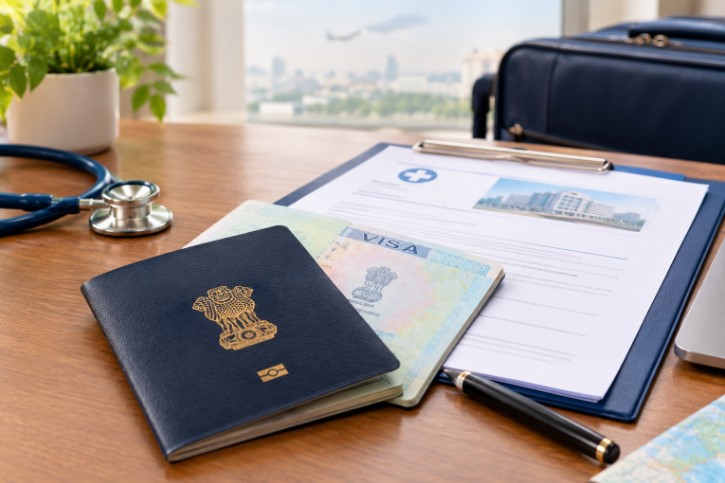
India issues a specific Medical Visa (MED Visa) for patients travelling for treatment. This is different from a tourist e-visa, and using the wrong category can cause delays at immigration.
What you need to apply
- A letter from your treating hospital in India confirming your appointment, procedure, and expected duration of stay
- Medical records supporting the need for treatment
- A valid passport with at least six months of remaining validity
- Proof of sufficient funds to cover treatment and stay
- Completed visa application form and recent passport photographs
India’s Medical Visa typically allows multiple entries and can be granted for up to a year, depending on the treatment timeline. For companions, a Medical Attendant Visa (MED-X) covers up to two family members travelling with the patient.
Apply at least 4–6 weeks before your travel date. Processing times vary by country. The Indian Visa Online portal is the official starting point. Some Indian embassies also accept walk-in applications. Confirm the process for your specific country before starting.
If you are working with MorningSun, our team can guide you through what your specific hospital requires for the visa support letter. Our Travel & Visa Assistance page has a full breakdown of document requirements by treatment type.
📋 Need help with visa documents and hospital letters?
Booking Your Flight: What Medical Patients Should Know
A flight for a medical trip is not the same as booking a holiday flight. Here is what changes:
Choose direct or minimal-stopover routes
Long-haul flights with multiple connections are hard on any traveller. For someone recovering from a procedure or managing a chronic condition, they can be exhausting. Where possible, choose direct routes into your destination city — Delhi (DEL), Mumbai (BOM), Chennai (MAA), Bangalore (BLR), or Hyderabad (HYD) — depending on where your hospital is located.
Book flexible fares
Treatment timelines can shift. A pre-surgery evaluation may flag a complication that delays the procedure. Book a fare that allows date changes without penalty, or at least at a low fee. Airlines like Air India, Emirates, and Singapore Airlines offer medical-flexible fares on select routes.
Inform the airline about medical needs
If you need wheelchair assistance, a specific seat, or are travelling with medical equipment (such as a CPAP machine, insulin supplies, or compression garments), notify the airline at least 48 hours before departure. Most airlines have a Special Service Request (SSR) process for this.
If you are travelling for cardiac care or orthopaedic procedures, ask your home doctor whether there are any restrictions on flying before or after the procedure. For IVF patients, airlines rarely have restrictions pre-treatment, but the return journey post egg retrieval or embryo transfer is worth discussing with your fertility specialist. Learn more about IVF treatment in India and what to expect at each stage.
Airport Pickup and Ground Transport: Plan This Before You Land

This is where many first-time medical tourists make an avoidable mistake. They assume they will sort out ground transport on arrival. After a 10–14 hour flight, often with jet lag, they arrive at a busy Indian airport with luggage and medical documents — and then try to negotiate a cab.
Do not do this. Arrange airport pickup in advance.
Options for arranged airport pickup for patients in India
- Hospital-arranged transfer: Most JCI-accredited and international-facing hospitals in India offer paid airport pickup. Ask your hospital’s international patient department when you confirm your admission.
- Medical tourism facilitator: If you are booking through a platform like MorningSun, transfer arrangements are part of the coordination service.
- Pre-booked private cars: Services like Meru Cabs or Ola Outstation allow advance booking. Confirm the driver’s number before landing.
The route from the airport to your hotel or hospital matters. Share the exact hospital address and your accommodation details with whoever is arranging your pickup. In cities like Delhi, Mumbai, and Chennai, traffic can add 60–90 minutes to what looks like a short drive on a map.
Accommodation: Where to Stay During a Medical Trip to India

Your accommodation during a medical trip is a medical decision as much as a comfort one. You want to be close to the hospital, in a clean environment, with easy access to food that suits a recovering patient.
Types of accommodation medical tourists choose
- Hospital guest houses: Many large hospitals — especially in Delhi, Chennai, and Mumbai — have on-campus or adjacent guest houses. These are basic, but proximity is unmatched.
- Service apartments near the hospital: For stays longer than a week, a serviced apartment gives you a kitchen, more space for a companion, and a home-like routine. Good for IVF cycles, cancer treatment courses, or post-operative recovery.
- Hotels with hospital partnerships: Some three- and four-star hotels near major hospitals offer medical tourism packages — airport pickup, diet-friendly meals, and quick connections to the hospital.
When evaluating accommodation, ask: How far is it from the hospital (in minutes, not kilometres)? Is there a pharmacy nearby? Does the kitchen or restaurant accommodate your dietary restrictions? Is there a lift? Is Wi-Fi reliable for teleconsultations?
🏥 Looking for verified clinics and hospitals in India?
Planning for a Companion: Often Overlooked, Always Important
Almost every international medical patient travels with a companion — a spouse, sibling, or parent. The companion’s logistics are often planned as an afterthought, but they matter as much as the patient’s.
Your companion will need their own Medical Attendant Visa (MED-X). Make sure their documents are submitted alongside yours. Many patients have arrived in India while their companion was held up in visa processing — a completely avoidable stress.
Think about practical logistics for the companion too: what do they do during your procedure or therapy sessions? Is there a waiting area at the hospital? What are the visiting hours? Is the accommodation comfortable enough for an extended solo stay while you are in hospital?
For longer stays, plan breaks for the companion. Many medical tourists from abroad have combined their medical trip with a short cultural or sightseeing experience once the patient is stable. The cultural and heritage experiences available across India can be a meaningful add-on for a companion who is otherwise waiting. Companion wellbeing is part of the overall trip plan.
Pre-Travel Teleconsultation: The Step Most Patients Skip
Before flying, speak with your treating doctor in India. Most hospitals with international patient units offer pre-travel teleconsultation. This is a critical step that does three things:
- Confirms that the hospital has all your reports and is ready to admit you on the planned date
- Allows the doctor to review your current health status and flag anything that should be addressed before you travel
- Sets expectations — you understand exactly what to bring, what fasting or pre-procedure protocols apply, and what happens on Day 1 after arrival
MorningSun offers Pre-Travel Teleconsultation as a patient support service, connecting you with your assigned hospital or clinic before departure. It is one of the most effective ways to reduce first-day confusion and wasted time.
Documents to Carry: Do Not Leave Home Without These
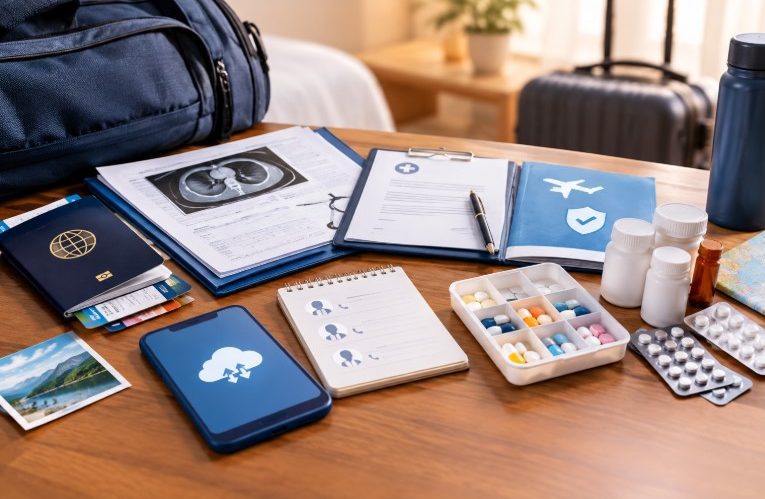
Physical and digital copies of all documents. Keep them in two separate places.
- Passport and Medical Visa (original + copies)
- Medical reports: blood tests, imaging, pathology, previous treatment summaries
- Doctor’s letter from your home country (if applicable)
- Hospital appointment confirmation and contact details
- Travel insurance policy document
- Emergency contacts — family at home, companion’s number, hospital’s international desk
- List of current medications with generic names (Indian pharmacies use generic names)
- Sufficient medication stock for the entire trip duration plus buffer
A useful habit: save all documents in a cloud folder (Google Drive or Dropbox) that you can access from any device. Share the link with one trusted person at home. If luggage is lost or a bag is stolen, you still have access to everything.
Managing Money and Currency During a Medical Trip
Medical bills in India are substantially lower than in the UK, US, Australia, or the Middle East for equivalent procedures. But costs can mount up if you are not tracking them, especially for accommodation, food, local transport, and incidentals during a multi-week stay.
Practical money tips
- Carry a mix of cash (Indian Rupees), international debit/credit card, and a multi-currency travel card
- Airport forex counters are convenient but rates are rarely the best — exchange a small amount there and get better rates at city forex centres or ATMs
- Inform your home bank that you are travelling to India, so your card is not blocked for foreign transactions
- Large hospitals often accept international credit cards. Confirm your specific hospital’s policy before arrival
The Treatment Planning & Cost Estimate service from MorningSun helps you understand the full cost breakdown — hospital fees, accommodation, travel within the city, and day-to-day expenses — so nothing is a surprise.
Combining Recovery with Wellness: A Practical Option for Extended Stays
If your medical trip involves a recovery period of one week or more, consider adding structured wellness support rather than spending that time in a hotel room. India is one of the few places in the world where you can combine post-treatment recovery with authentic Ayurvedic care.
Post-operative Panchakarma, lymphatic drainage therapies, and nutritional reset programs are available at wellness centres across Kerala, Rishikesh, and Pune. These are not luxury add-ons — they are clinically supportive and documented in Ayurvedic literature as effective recovery modalities for surgical and chronic illness recovery.
For patients who want to know more about how Ayurvedic support works alongside modern medical recovery, Advik Ayurveda offers detailed resources on traditional formulations and herbal preparations that complement post-treatment wellness routines. If you’d like to research Ayurvedic wellness options to support your recovery back home, their product range is a good reference point.
🌿 Want Ayurveda support alongside your medical recovery?
What to Expect on Arrival Day

Knowing what happens on Day 1 removes a lot of the anxiety of first-time medical travel.
You land, clear immigration with your Medical Visa, collect your luggage. Your pre-arranged car is waiting — look for a driver holding a name card or check your phone for the number shared in advance.
You check in to your accommodation. In most cases, the hospital visit or pre-admission evaluation is on Day 2, giving you a rest day after travel. Use Day 1 to eat lightly (stick to familiar or simple foods), rest, hydrate, and adjust to the time zone.
Have your hospital’s international desk number saved. Call them on Day 1 to confirm your Day 2 appointment time. This is a simple step, but many patients forget and turn up to the hospital without confirmation.
Staying Informed While You Are in India
For NRIs and foreign nationals spending time in India for medical purposes, staying updated on local news, regulations, and cultural context can be helpful — especially if your stay extends beyond a few weeks.
Platforms like Desh Sansaar cover current affairs, India-specific news, and cultural updates that help NRIs stay connected with what is happening in the country during their visit. Knowing local context — from public holidays to regional events — can affect hospital schedules and appointment availability.
📞 Ready to start planning?
Let MorningSun coordinate your entire medical trip.
Your Medical Trip Deserves a Solid Plan
Managing the travel logistics of a medical trip to India is not complicated when you break it into steps: visa, flights, airport pickup, accommodation, documents, companion planning, and a pre-travel teleconsultation. Each step handled in advance means one less thing to manage when you arrive.
MorningSun exists specifically to help international patients and NRIs make this journey with confidence. From finding the right verified clinic to managing every logistics layer of your trip, the platform is built around one question: how do we make this easier for the patient?
Your health is why you are travelling. Let the planning be handled.
FAQs:
Yes. A Medical Visa (MED Visa) is required — a tourist visa is not valid for planned treatment.
Book 6–8 weeks ahead to allow time for visa processing and treatment confirmation.
They need a separate Medical Attendant Visa (MED-X), applied alongside your visa application.
Through your hospital’s international desk, or via a medical tourism coordinator like MorningSun.
Hospital guest houses or serviced apartments within 2 km of the hospital are ideal for treatment stays.
Beyond treatment costs: budget ₹1,500–₹3,000/day for accommodation, food, and local transport.
Highly recommended — it confirms your hospital is ready and avoids Day 1 confusion on arrival.
Yes — many patients add an Ayurvedic recovery stay post-procedure. It supports healing and improves outcomes.
External Resources
- Indian Medical Visa — Official Portal (Indian Visa Online)
- National Accreditation Board for Hospitals & Healthcare Providers (NABH)
- Joint Commission International (JCI) — Accredited Hospitals in India
- World Health Organization (WHO) — Patient Safety & Medical Travel Guidance
- Medical Tourism Association (MTA) — Resources for International Patients
Comments