
Long flights, new food, shifting time zones and crowded airports. Many travelers pay for it with a cold, an upset stomach or plain exhaustion. That is why more visitors now look for an ayurvedic immunity program India offers before, during or after a trip.
These programs mix herbal care, cleansing therapies, diet and rest over one to three weeks. They do not replace vaccines, medicines or your doctor. What they aim to do is support your body’s natural resilience and teach habits you can keep. This guide shows how they work, what to expect, how to choose a safe one and how to carry the benefits home. It suits first-time visitors, frequent flyers and NRIs returning to India.
Unsure which program fits your dates?
What Does “Immunity” Mean in Ayurveda?
Ayurveda uses the word ojas for deep vitality and resilience. It also speaks of vyadhikshamatva, the body’s ability to resist illness. In this view, strong immunity rests on four things: good digestion (agni), balanced doshas, sound sleep and a calm mind.
Modern medicine describes immunity differently. It looks at antibodies, white blood cells and inflammation. The two systems use different language, and Ayurvedic ideas are not proven in the way vaccines are. Research bodies note that studies on Ayurveda are limited and that product quality can vary. Good centers say this openly. Treat the program as supportive care, not a shield.
Who Should Consider an Immunity Program?
Not every traveler needs a full program. These groups tend to benefit most:
- First-time visitors who want a calm start before touring India
- Frequent flyers who feel run down after repeated trips
- NRIs coming home for weddings, family duties or long stays
- Older family members who travel with you and tire easily
- Remote workers and executives recovering from months of stress
Choosing an ayurvedic immunity program India has to offer starts with your goal. If you want rest and routine, a short stay is enough. If you want lasting change in sleep, digestion and stress, plan for longer.
How an Ayurvedic Immunity Program in India Is Structured

Most programs follow the same three stages, even when the names differ.
Stage 1: Consultation and assessment
A vaidya (Ayurvedic doctor) checks your pulse, digestion, sleep, stress and medical history. Share every medicine and supplement you take. This visit decides your diet, oils and herbs. Many centers also offer a remote check before you fly, and MorningSun explains how that works on its pre-travel teleconsultation page.
Stage 2: Preparation and gentle cleansing
Week one is usually calm. Expect warm, simple meals, herbal drinks and daily oil massage (abhyanga). Some guests also receive steam therapy. Stronger cleansing is only done when the doctor judges you fit for it. If you want to understand that route, read about Panchakarma detox in India. Many travelers do better with the gentler version.
Stage 3: Rebuilding with rasayana
Once the body settles, the team shifts to rejuvenation. Meals become richer, sleep is protected and strength-building herbs are introduced. This is the stage that gives the program its immunity focus.
Rasayana Therapy and Immunity: What to Know
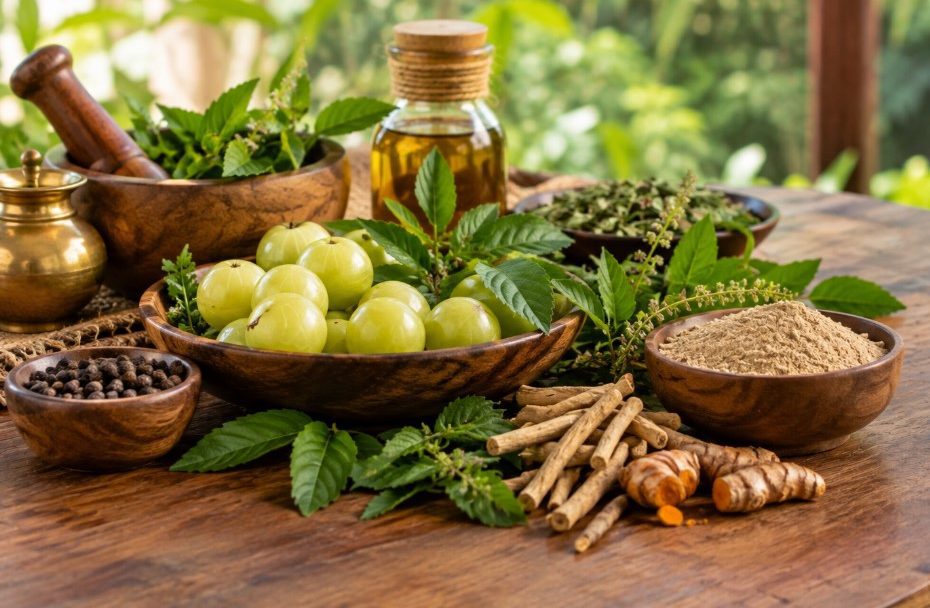
Rasayana is the branch of Ayurveda devoted to rejuvenation. Classical texts describe it as long-term nourishment of the body’s tissues. In practice, rasayana therapy for immunity may include:
- Amalaki (Indian gooseberry), a well-known source of vitamin C
- Guduchi, traditionally used when recovery from fever or illness is slow
- Ashwagandha, commonly used for stress and fatigue
- Tulsi (holy basil), often taken as a daily tea
- Chyawanprash, a herbal jam made with amalaki and spices
Each of these has limits. Ashwagandha, for example, does not suit everyone, including people who are pregnant or have thyroid or autoimmune conditions. That is why rasayana should be prescribed after an assessment, not picked off a shelf.
Rasayana also works slowly. Most guests notice better energy, digestion and sleep first. Fewer seasonal infections, if they come, show up over months rather than days.
Want to see your options side by side?
Ayurveda for Travelers’ Health: Why Trips Need a Different Plan

Travel strains the body in predictable ways. Ayurveda links most of these to vata, the dosha tied to movement, dryness and irregularity. Flights, jet lag, skipped meals and cold air-conditioning all push vata up.
Typical traveler complaints include broken sleep, irregular digestion, dry skin and lips, and a low, wired mood. A few simple habits help:
- Eat warm, cooked food at regular times
- Sip warm water through the day
- Massage the soles of your feet with sesame oil before bed
- Keep dinner light and early
- Rest for a day or two after long flights before busy sightseeing
Dry cabin air also hits your skin. A steady routine with Ayurvedic skin care and a nourishing lip care balm can ease that dryness while the inside work happens.
How to Choose the Right Immunity Retreat in India
An immunity retreat India offers can range from a simple clinic to a luxury resort. Price alone tells you little. Look at these points instead.
Location and season
Kerala is the classic choice, with centers built around Ayurveda. Many consider the monsoon months, June to September, a traditional time for rejuvenation. For cooler air and a quieter mood, the Himalayas suit many guests. You can compare Kerala Ayurveda resorts, Rishikesh and Himalayan retreats and Goa Ayurveda resorts in one place. For most other regions, October to March is the comfortable window.
Quality checklist
- A registered Ayurvedic physician on site, not only therapists
- A written plan after your assessment
- A clear list of what the price includes
- Clean treatment rooms and fresh, hygienic kitchens
- Honest language: no promise to cure or “boost immunity overnight”
- Willingness to coordinate with your own doctor
If a center guarantees results or pushes a long package before examining you, walk away.
What a Typical Day Looks Like

Routines differ, but most days follow a gentle rhythm:
- 6:30 am: wake up, warm herbal water
- 7:00 am: yoga and breathing practice
- 8:30 am: light breakfast
- 10:00 am: massage or other therapy
- 1:00 pm: main meal, then rest
- 5:00 pm: walk or guided meditation
- 7:00 pm: light dinner
- 9:30 pm: lights out
Therapies such as Shirodhara, a slow stream of warm oil over the forehead, are often added for stress and sleep. If your trip is more about calm than treatment, look at meditation retreats as a companion.
How Long Should You Stay?
Seven days: a reset
A week suits busy travelers. You get assessment, light cleansing and rest. It works well as a stop between long journeys, and seasonal programs such as the seasonal detox programs often use this length.
Fourteen days: a proper program
Two weeks gives time for preparation and a short rasayana phase. This is the sweet spot for most guests who want real change in sleep and digestion.
Twenty-one days: deep rebuilding
Three weeks suits those recovering from long stress, burnout or heavy travel schedules. It also gives you time to learn diet and routine habits properly.
Common Myths Travelers Believe
Myth one: more cleansing means more immunity. In truth, harsh cleansing can leave a tired traveler weaker. Good programs match the strength of treatment to your condition.
Myth two: herbs are always safe because they are natural. Some herbs interact with medicines, and poorly made products can carry contaminants. Always ask about sourcing and testing.
Myth three: one week fixes a year of stress. A week can start the change, but habits decide the result. Plan how you will keep the routine at home.
What to Budget For
Prices vary widely by region, room type and length of stay. Ask each center for a written quote that lists what is included. Look for these items:
- Doctor consultations and follow-ups
- Daily therapies and the number of sessions
- Meals, herbal drinks and medicines
- Yoga or meditation classes
- Airport pickup and extra nights
Medicines and add-on therapies are where bills tend to grow. A clear, itemized plan protects you from surprises and lets you compare centers fairly. MorningSun’s treatment planning and cost estimate page shows how estimates are prepared.
Safety: Who Should Be Careful

Ayurveda is gentle in many ways, but it is not risk-free. Speak to your own doctor before booking if you:
- Are pregnant or planning pregnancy
- Have diabetes, thyroid disease, heart disease or an autoimmune condition
- Take blood thinners, immune-suppressing drugs or other regular medicines
- Are recovering from surgery or cancer treatment
Survivors have special needs, and MorningSun’s guide to Ayurveda for post-cancer recovery explains how to approach it safely. Never stop a prescribed medicine on a center’s advice. Ask how herbal products are tested, and keep your travel vaccines up to date with a regular travel clinic.
Prefer to talk it through first?
Planning Your Trip: Visa and Logistics
Most visitors enter on a tourist or e-visa, while some guests need a different category for treatment stays. Check the right type early, and use MorningSun’s travel and visa assistance if you want help with the paperwork.
A few more tips make the stay smoother:
- Carry copies of prescriptions and recent reports
- Buy travel insurance that covers your stay
- Arrive one or two days early to beat jet lag
- Do not stack sightseeing right before or after the program
It also helps to know how care works on the ground. DeshSansaar’s guide to the healthcare reality in India explains what overseas visitors often misjudge about clinics, costs and paperwork.
Keeping the Benefits After You Fly Home
The real test starts when you return to your normal life. Keep the basics: regular meals, warm food, early dinners, a fixed bedtime and a short daily walk.
NRIs and overseas guests can continue with remote support. A virtual dosha assessment shows what to adjust, and the Stress and Immunity Program offers guided follow-up from home. You can also pair it with Ayurvedic diet planning for your local climate and kitchen.
To see how Ayurveda sits beside modern care, this Ayurveda guidance for global Indians gives a clear, balanced view.
Final Thoughts
An ayurvedic immunity program India offers works best as a planned, doctor-led stay, not a quick fix. Choose a center with qualified physicians, pick a length that fits your life and keep your vaccines and regular care in place. Then carry the routines home.
Ready to plan your stay?
FAQs:
A guided stay combining diet, herbal care, massage and routines to support resilience, usually lasting one to three weeks.
Seven days gives a reset. Fourteen to twenty-one days suits deeper rasayana care and lasting habit change.
No. Pregnancy, thyroid, autoimmune conditions and some medicines need a doctor’s review before any herbs begin.
No. Ayurveda is supportive care. Keep travel vaccines and medical advice from your regular doctor.
October to March is comfortable for most regions. Kerala also offers traditional monsoon rejuvenation from June to September.
Yes. Online dosha checks, diet plans and coaching can continue the routine after you return home.
Comments