
Kidney failure changes daily life fast. Dialysis takes hours every week, and the costs keep climbing. For many families abroad, a transplant feels out of reach because of long waits or very high hospital bills.
That is why more patients now ask about kidney transplant cost in India. This guide answers that question in plain words. You will see what the price usually covers, what can push it up, who may have a transplant as a foreigner, and how the process runs from the first call to the flight home.
It is written for patients, NRIs and family members who may act as donors or caregivers. If you want to understand how coordination works before you plan, our page on organ transplant assistance explains each support step.
How Much Does a Kidney Transplant Cost in India?

A realistic price range
Most private hospitals quote one package for a living-donor kidney transplant. Published estimates for international patients often fall between about USD 12,000 and USD 25,000. Some hospitals charge more, especially in large metro cities or for complex cases. Treat any single number you see online as a starting point, not a promise.
The package normally covers two operations, one for the patient and one for the donor, plus the hospital stay. Your final bill depends on your health, the hospital you pick, and whether any problem appears after surgery.
Why the price is lower than in Western countries
Surgeon fees, hospital rooms, nursing care and lab tests all cost less in India. Many transplant units also perform a large number of cases each year, which builds skill. In the United States, the same surgery can cost several times more.
A lower price does not have to mean lower standards. It does mean you should check quality yourself. We cover how to do that in the hospital section below.
Not sure what your own estimate should look like?
What Does a Kidney Transplant Package Usually Include?
Ask for a written list before you pay anything. Packages differ, so compare them line by line.
Items most packages cover
- Tests for both donor and patient, such as blood work, tissue matching, scans and heart checks
- Surgery fees for the patient and the donor
- Operating theatre, ICU and ward days for a set number of days
- Medicines used during the hospital stay, including the first anti-rejection doses
- Doctor and nursing care while you are admitted
Items often billed separately
- Extra ICU or ward days if recovery is slow
- Treatment of problems such as infection or early rejection
- Dialysis sessions before surgery
- Medicines after discharge, and lab tests during follow-up visits
- Hotel, meals, local travel, interpreter and visa costs
- Flights for the patient, the donor and any attendants
Our treatment planning and cost estimate service helps you turn these lines into one clear budget before you travel.
What Changes the Final Cost?
Several things can move your bill up or down:
- City and hospital: Large corporate hospitals in Delhi NCR, Mumbai or Chennai usually charge more than smaller centres.
- Room type: A single private room costs more than a shared ward.
- Your health: Heart disease, diabetes or past infections can mean more tests and a longer stay.
- Donor fitness: If the first donor is not suitable, extra tests or a new donor add time and cost.
- Type of surgery: Open surgery is standard. Robotic options may cost more.
- Length of stay: A smooth recovery keeps costs down. Complications do the opposite.
- Lifelong medicines: Anti-rejection drugs are needed for life, so plan this cost for your home country too.
Common Mistakes That Raise Your Bill
Most extra costs come from avoidable errors. Watch for these:
- Booking flights too early. Committee approval and test results can shift your surgery date. Wait for a confirmed schedule.
- Skipping a written estimate. A verbal price is easy to change later. Get the package, the exclusions and the payment terms on paper.
- Arriving with incomplete papers. Missing certificates mean extra days in a hotel while you wait.
- Choosing only on price. The cheapest quote may leave out ICU days or follow-up care. A slightly higher, clearer package is often safer.
- Leaving the donor out of the budget. The donor needs tests, surgery, recovery time and a safe trip home as well.
Tell the hospital about your full medical history, including past surgeries and allergies. Surprises on the operating table cost more than honest answers at the start.
Who Can Have a Kidney Transplant in India as a Foreigner?

India treats foreign patients, but the rules are strict. They exist to stop organ trade and to protect donors.
The living donor rule
For most foreign patients, a living donor is the practical route. Under Indian law, an Indian donor cannot give a kidney to a foreign patient unless the two are near relatives. When the donor or the patient is a foreign national, the hospital’s authorisation committee must approve the case before surgery.
A senior official at your country’s embassy in India must also certify the relationship between donor and patient on Form 21. If your country has no embassy in India, your government issues the certificate in the same format. The Health Ministry explains this in a reply to the Lok Sabha.
Near relatives generally means a spouse, parent, child, sibling, grandparent or grandchild. Your hospital will confirm who qualifies in your case.
Deceased donor kidneys
Foreign patients can ask to be registered for a deceased donor through the treating hospital. Waits can be long, though, and most families plan around a living donor. Ask each hospital how its policy works in practice.
Kidney Transplant Process for Foreigners, Step by Step

The kidney transplant process for foreigners has more paperwork than the same surgery for local patients. Knowing the steps early saves weeks.
- Share your records. Send recent lab reports, dialysis details and your medicine list. A pre-travel teleconsultation lets a specialist review your file before you book a flight.
- Get a written opinion and estimate. Many families first ask for a second opinion before travelling to compare plans.
- Confirm the donor. The donor must be willing, medically fit and legally allowed. Blood group and tissue matching come early.
- Collect documents. Expect passports, birth and marriage certificates that prove the relationship, medical reports and embassy forms. Some papers need attestation in your home country.
- Apply for visas. The patient and attendants need the right medical visas. Details are in the visa section below.
- Arrive and finish tests. Both patient and donor usually need a few days of tests in India.
- Wait for committee approval. The authorisation committee reviews the papers and may speak to the donor and patient. Timing varies, so keep a few spare days.
- Surgery and hospital stay. The operation takes several hours. The donor usually leaves hospital before the patient.
- Early follow-up in India. Doctors adjust anti-rejection drugs and watch blood tests. Many centres ask patients to stay for several weeks, and your team decides when you may fly home.
- Hand over to your home doctor. Carry the discharge summary, medicine list and test results for your local nephrologist.
For wider trip logistics, read our first-time medical trip planning guide.
Ready to see your steps and costs in one place?
How to Choose Among Renal Transplant Hospitals in India
Many renal transplant hospitals in India perform this surgery. Their records are not all the same, so compare them on facts, not on advertising.
- Accreditation: Look for NABH or JCI status and a registered transplant programme.
- Volume and results: Ask how many kidney transplants they do each year and what their one-year graft survival rate is.
- The team: A transplant surgeon, a nephrologist, an anaesthetist and a dedicated international patient desk should all be in place.
- Committee timing: Ask how often the authorisation committee meets and how long foreign cases usually take.
- Clear billing: You should get a written estimate, a list of exclusions and a named coordinator.
- Daily comfort: Check language support, food options and nearby housing for your family.
Do not rely on star ratings alone. Ask the coordinator to set up a short call with the transplant nephrologist. A good team explains the risks, including rejection, infection and the need for lifelong medicines, without pressure. If a hospital promises a guaranteed result or a fixed surgery date before any testing, treat that as a warning sign.
You can start a shortlist by browsing verified clinics on MorningSun. Our advanced medical treatments page also shows the wider specialities we support.
Visa, Stay and Recovery in India

Most overseas patients enter on an e-Medical visa. At the time of writing, it allows a stay of up to 60 days with three entries, and up to two attendants can apply for e-Medical Attendant visas. Rules change, so check the official Indian e-Visa portal and confirm with your hospital. If you expect a longer stay, ask about a regular medical visa. The donor also needs a valid visa, so ask the hospital which type applies to your donor.
Our travel and visa assistance team can explain how the hospital invitation letter fits into your application.
Book housing close to the hospital for the weeks after discharge. Some families ask about a hospital stay versus a wellness resort for recovery. After a fresh transplant, stay near your transplant team. A resort cannot replace regular blood tests and medical checks.
Infection risk is higher while you take anti-rejection medicines. Follow your team’s rules on drinking water, raw food and crowded places.
Skin can also turn dry and sun-sensitive on these drugs. Once your doctors approve, simple and mild skincare helps. If you prefer Ayurvedic options, Advik Ayurveda offers gentle skincare. Always ask your transplant doctor before you use any herbal or Ayurvedic product, because some herbs can interfere with transplant medicines.
Need help lining up the invitation letter and visas?
Stay Safe: Avoid Brokers and Unclear Offers
Organ trade is illegal. Never pay a person who promises a donor, a “quick” kidney or approval without proper checks. Genuine programmes use embassy certificates, committee review and hospital records.
The Declaration of Istanbul explains the global stand against organ trafficking. For general warning signs that NRIs and foreigners meet in India, read DeshSansaar’s guide to red flags and scams to watch for.
Planning Money and Family Support for Transplant Medical Tourism
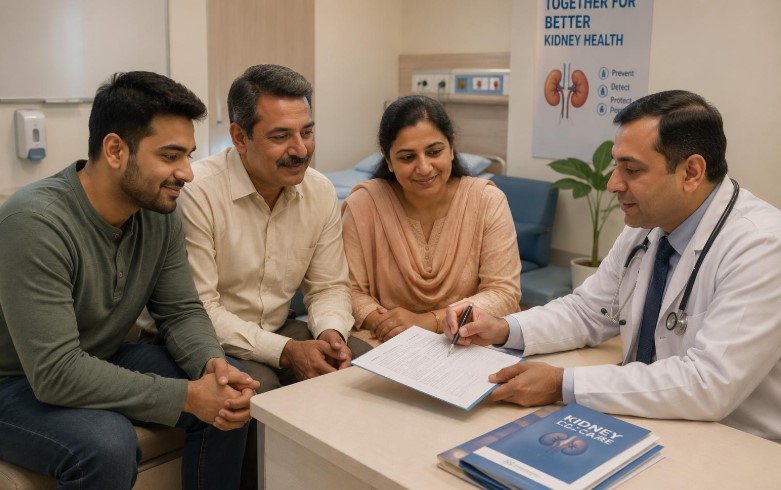
Transplant medical tourism works best when money and family roles are settled early.
- Budget for surgery plus six to eight weeks of living costs, and keep a buffer of 15 to 20 per cent.
- Check whether your insurer pays for care abroad. Many plans do not.
- Plan for lifelong medicines and regular lab tests at home.
- Choose one main caregiver and a backup. Recovery is long and tiring.
- Make sure the donor also has follow-up care arranged.
Family opinions can be loud during a health crisis. DeshSansaar’s explainer on how treatment works in India helps NRIs and foreigners understand the care culture before they arrive.
Final Thoughts
A kidney transplant in India can cost far less than at home, but the price is only part of the decision. Legal approval, a suitable donor, a trusted hospital and a clear estimate matter just as much. Start early, ask for everything in writing, and work only with licensed hospitals.
Have your reports ready?
FAQs:
Packages for international patients often run about USD 12,000 to 25,000, depending on hospital, city and complications.
Yes, with a legally allowed living donor, an embassy certificate and authorisation committee approval.
Usually a near relative, such as a spouse, parent, sibling, child or grandparent.
Many centres advise several weeks. Your transplant team decides when you can safely fly home.
Hospital-stay doses usually are. Long-term medicines after discharge are normally billed separately.
Usually yes, with a hospital invitation. Check the official portal because visa rules change.
External Resources
- NOTTO: National Organ and Tissue Transplant Organisation, Government of India
- Health Ministry reply on transplants involving foreign nationals (Lok Sabha)
- Indian e-Visa portal: e-Medical and e-Medical Attendant visas
- Declaration of Istanbul on Organ Trafficking and Transplant Tourism
- NIDDK: Kidney transplant basics for patients
Comments