
Eye surgery in India costs a fraction of what patients pay in the US, UK, or the Gulf. That is the headline figure most people search for. But what you actually pay depends on the procedure, the lens or laser technology, the city, and the hospital’s reputation. This guide breaks down LASIK cost in India, cataract surgery pricing, and the extra expenses people usually forget to budget for, so you can plan with real numbers instead of guesswork.
Whether you are an NRI visiting family or a first-time international patient exploring ophthalmology treatment in India, this guide is built to help you compare options before you commit to a hospital or a travel date.
Why International Patients Choose India for Eye Surgery
India performs a high volume of eye procedures every year across both public and private hospitals. Private eye hospitals use the same laser platforms and intraocular lens (IOL) brands found in Western countries, but price procedures for a domestic market that is far more cost-sensitive. That gap is what makes eye surgery cost in India attractive to foreign patients.
Surgeons at leading Indian eye hospitals often complete high case volumes each year, which keeps their hands-on experience strong for both routine and complex cases. Add shorter waiting times than many public healthcare systems abroad, and it is easy to see why ophthalmology treatment in India draws patients from the Gulf, Africa, Southeast Asia, and Western countries.
LASIK Cost in India: The Real Numbers
LASIK cost in India typically ranges between ₹25,000 and ₹1,10,000 per eye, depending on the laser technology used. Bladeless, all-laser methods such as Femto-LASIK or SMILE sit at the higher end of that range, while standard microkeratome-based LASIK is priced lower.
What Changes the LASIK Price
- Laser technology: Femto-LASIK and SMILE cost more than blade-based LASIK because the equipment and per-procedure disposables are pricier.
- Degree of refractive error: very high myopia or astigmatism sometimes needs extra pre-surgery mapping, which can add to the fee.
- Hospital tier and city: metro hospitals in Delhi, Mumbai, Bengaluru, and Chennai are usually priced higher than similar-quality centres in smaller cities.
- Surgeon experience: senior refractive surgeons with large case volumes may charge a premium over junior consultants.
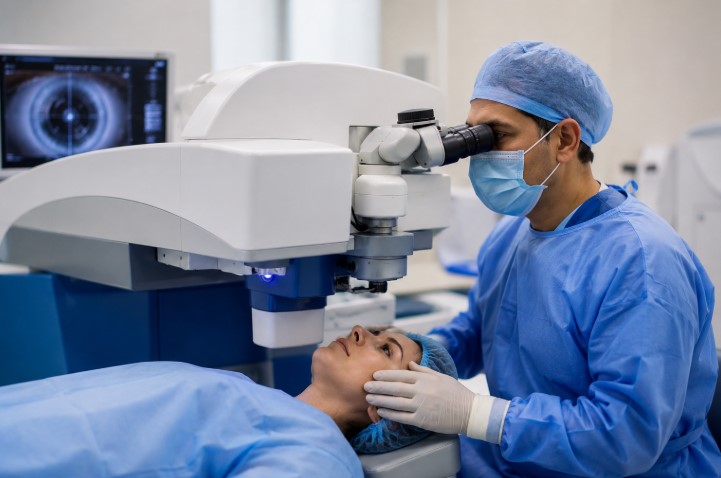
LASIK Cost: India Compared to Other Countries
In the US, LASIK commonly costs between $2,000 and $3,000 per eye. In the UK, it ranges from about £1,800 to £2,600 per eye. In India, the same procedure, on comparable laser platforms, generally costs the equivalent of $300 to $900 per eye. Even after adding flights and a short stay, most international patients still spend far less than they would at home.
Cataract Surgery Cost in India
Cataract surgery cost in India usually falls between ₹20,000 and ₹1,50,000 per eye. The biggest swing factor is the intraocular lens you choose, not the surgery itself. The technique used almost everywhere now is phacoemulsification, a small-incision method with a short recovery window.
Standard vs Premium Lens Options
- Monofocal IOL: the most affordable option, corrects vision at one distance, usually far vision, so reading glasses are often still needed afterward.
- Toric IOL: corrects astigmatism along with the cataract, priced higher than a standard monofocal lens.
- Multifocal or trifocal IOL: reduces dependence on glasses for near, intermediate, and far vision, and sits at the top of the price range.
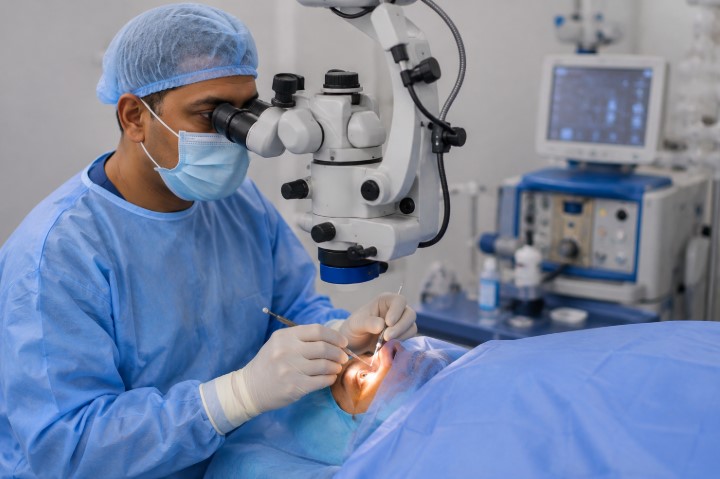
What a Cataract Package Usually Covers
Most Indian eye hospitals quote cataract surgery as a package covering the pre-operative eye workup, the surgery, the lens, day-care admission, and one or two follow-up visits. Ask the hospital to confirm, in writing, exactly what is bundled into the quoted price before you fly in, since ophthalmology treatment in India can be priced differently from one clinic to another.
Costs Beyond the Operating Room
The surgery fee is only part of your total budget. Anyone researching eye surgery cost in India should also account for:
- Return flights, which vary widely by origin city and season.
- A short hotel or guesthouse stay, generally 3 to 7 days for LASIK and a little longer for cataract surgery when both eyes are done on separate days.
- Local transport between the airport, hotel, and hospital.
- Pre-surgery diagnostic tests and post-surgery medicated eye drops.
- A travel companion’s expenses, since many hospitals recommend you are not alone for the first 24 to 48 hours after surgery.
A realistic all-in budget, procedure plus travel plus stay, is far more useful than the surgery fee alone. MorningSun’s treatment planning and cost estimate service is built around exactly this kind of side-by-side planning, so you see the full picture before you book a flight.
Want a real number for your case, not a website estimate?
How to Get a Reliable Eye Surgery Quote Before You Travel
Do not rely on a single figure from a hospital website. Prices listed online are often starting prices, not final ones. Before booking flights, get a written quote listing the lens or laser technology, the surgeon’s fee, hospital charges, and the number of included follow-ups.
If you are unsure which questions to ask, a second medical opinion from an independent ophthalmologist can confirm whether the recommended procedure and lens actually match your eye condition, before you commit to a package.
A short pre-travel teleconsultation with the treating hospital is also worth doing. It lets the surgical team review your reports and confirm eligibility and pricing before you leave home, so there are no surprises on arrival.
Choosing an Eye Hospital You Can Trust
Cost matters, but accreditation matters more when you are trusting a surgeon with your vision. Check whether the hospital holds NABH (National Accreditation Board for Hospitals) or JCI accreditation, ask how many similar procedures the surgeon performs each year, and request outcome data if it is available.
MorningSun’s guide on hospital accreditation standards for international patients explains what these accreditation labels actually mean in practice, so you can shortlist a hospital on evidence rather than marketing photos.
It also helps to understand how medical treatment actually works on the ground in India, from how appointments are scheduled to how consent and billing are handled. DeshSansaar’s guides are written specifically for NRIs and foreign patients trying to make sense of these differences before they land.
Recovery After LASIK or Cataract Surgery
LASIK recovery is usually quick. Most patients notice clearer vision within 24 to 48 hours, though full stabilisation can take a few weeks. Cataract surgery recovery is similarly fast for routine cases, with most people resuming normal activity within a week, while avoiding water in the eye, dust, and heavy exertion during that window.
Doctors typically advise against rubbing the eyes and recommend protective sunglasses outdoors during early recovery. The skin around the eyes can look tired or puffy in the days after any eye procedure, simply from the drops, protective eyewear, and disrupted sleep in an unfamiliar city.
Many patients like to add a gentle, fragrance-free natural under-eye care routine once the surgeon confirms it is safe to apply anything near the eye area again. Advik Ayurveda’s under-eye range uses ingredients like cucumber and aloe vera, aimed at comfort and freshness rather than treating the surgical site itself, so always check timing with your surgeon first.
Planning the Practical Side of Your Trip
Booking eye surgery in India as a foreigner involves more than choosing a hospital. You will need a medical visa in most cases, a hospital invitation letter, and an itinerary that allows time for both the procedure and recovery before you fly home.
MorningSun’s travel and visa assistance service and its documents checklist for international patients cover exactly what paperwork you need before departure, so this part of the trip does not become the stressful part.
NRIs in particular sometimes underestimate how different the on-ground healthcare experience feels compared to home. DeshSansaar’s guide to healthcare realities in India is a useful read before you finalise any treatment plan, as it covers the gaps between how care is marketed and how it is actually delivered.

Sample Cost Snapshot
These are indicative ranges for planning purposes only. Always confirm final pricing directly with the treating hospital.
| Procedure | Typical Cost (per eye, INR) | Typical Cost (per eye, USD approx.) |
| Standard LASIK | ₹25,000 – ₹45,000 | $300 – $550 |
| Femto-LASIK / SMILE | ₹55,000 – ₹1,10,000 | $650 – $1,300 |
| Cataract – Monofocal IOL | ₹20,000 – ₹45,000 | $250 – $550 |
| Cataract – Toric IOL | ₹45,000 – ₹85,000 | $550 – $1,000 |
| Cataract – Multifocal/Trifocal IOL | ₹85,000 – ₹1,50,000 | $1,000 – $1,800 |
USD figures are approximate and will move with the exchange rate. Use a live converter, such as the one on XE.com, for the current rate before finalising your budget.
Ready to compare accredited eye care providers directly?
Getting Your Numbers Right Before You Book
Eye surgery cost in India is genuinely lower than in most Western countries, but the final bill depends on choices you make along the way: the lens or laser type, the hospital tier, and how well you plan travel and recovery. Get a written, itemised quote, confirm the hospital’s accreditation, and build in time to recover properly before your flight home. That is what turns a low headline price into an actual good outcome.
If you would rather skip the research and speak to someone directly, MorningSun’s team can help you compare treatment costs across verified hospitals and put together a realistic plan for your trip.
Get a clear, written estimate for your LASIK or cataract procedure.
FAQs:
Often similar. Basic LASIK can cost less than premium-lens cataract surgery, but ranges overlap.
Yes, most quote an all-inclusive package covering surgery, lens, and short-term follow-up care.
Around 5 to 7 days, including pre-surgery tests and one follow-up check.
Yes, when performed at an accredited hospital with proper pre-surgery health screening.
Sometimes, for cataract surgery if medically necessary. LASIK is usually elective and self-funded.
Yes, many patients extend their trip for rest, once the surgeon clears travel and activity.
External Resources
These external, non-commercial sources are useful for further reading on medical travel to India and general eye health.
• Ministry of Tourism, Government of India – Wellness Tourism overview
• World Health Organization – Blindness and Visual Impairment fact sheet
• India Brand Equity Foundation – India Heals medical tourism overview
Comments