
Joint pain rarely announces itself. One day the stairs feel harder. A few months later, your fingers ache when you open a jar. If you live abroad, you may also wonder whether a trip to India for care is worth the effort.
Many people now look at ayurvedic therapy for joint pain as a structured option beside regular medical care. It combines medicated oils, herbal heat, cleansing treatments, diet, and daily routine. The aim is to ease stiffness and support movement. It is not a quick fix, and it does not replace a proper diagnosis.
This guide explains the main therapies, how a programme runs, what the evidence says, and how to choose a safe centre. It is written for patients in India, NRIs, and international travellers who want clear answers before they book.
How Ayurveda Explains Joint Pain
Ayurveda does not treat all joint pain the same way. A physician looks at the type of pain, your digestion, your body type (prakriti), and even the season. Two people with knee pain may receive very different plans.
Sandhigata Vata: the wear-and-tear pattern
Sandhigata Vata is the term for degenerative joint problems. It is close to what modern medicine calls osteoarthritis. Ayurveda links it to aggravated Vata, which is dry, cold, and mobile. Typical signs are creaking joints, pain on movement, and stiffness that eases with warmth. Therapy here focuses on oil, warmth, and strengthening.
Amavata: the inflammatory pattern
Amavata describes painful, swollen, stiff joints linked to ama, a sticky by-product of weak digestion. It resembles rheumatoid arthritis in some ways, though the two are not identical. Morning stiffness, heaviness, and swelling are common.
Here, practitioners usually improve digestion first and reduce ama before using heavy oil therapies. Oil massage given too early can make this type worse. That is why a correct assessment matters more than any single treatment.
For a wider view of how these patterns fit into a care plan, see our guide to Ayurveda for arthritis and joint care.
Main Ayurvedic Therapies for Joint Pain
These are the treatments you will meet most often on a programme. Names vary between centres, so ask for a plain explanation of each one.
Abhyanga and Snehana: oil therapy
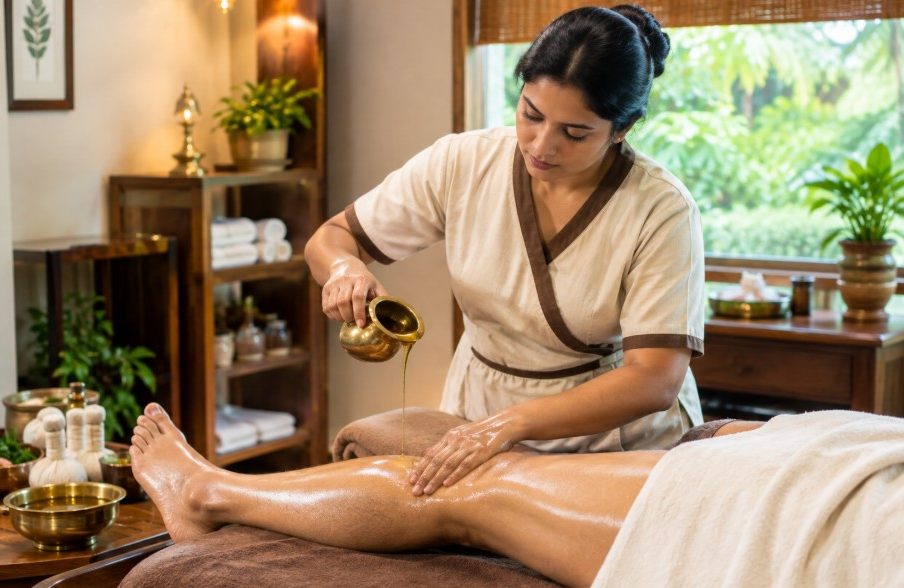
Abhyanga is a full-body or local massage with warm medicated oil. Snehana is the wider term for oil treatments, including oils taken internally under supervision. Oil calms Vata, softens stiff tissue, and makes movement feel easier. Many centres begin here. You can read more about Abhyanga and rejuvenation therapies on MorningSun.
Swedana and Pinda Sweda: herbal heat
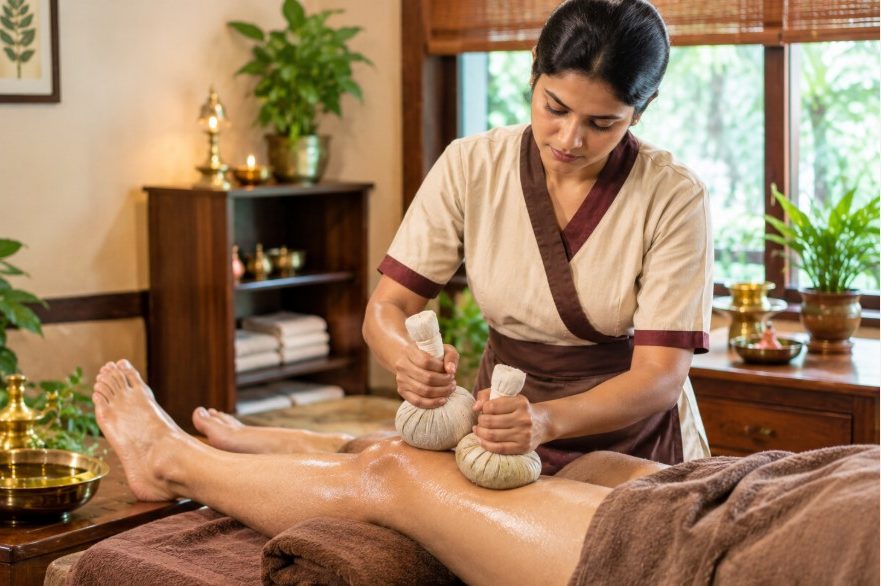
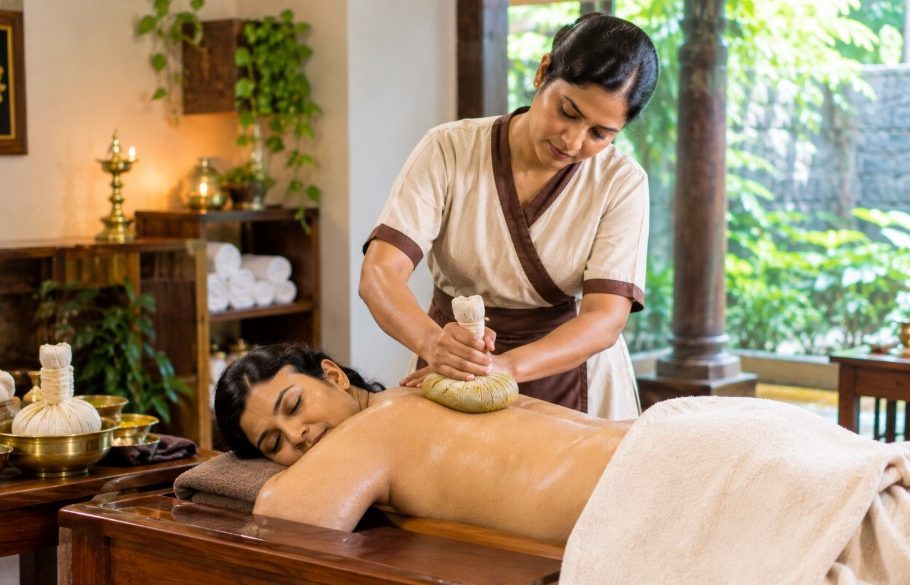
Swedana means therapeutic sweating. In Pinda Sweda, warm boluses of herbs or medicated rice are tied in cloth and pressed over the body. The heat relaxes the muscles around the joint and eases stiffness. It usually follows oil massage. People with heart problems, very high blood pressure, or skin conditions need extra care.
Janu Basti, Kati Basti, and Greeva Basti
These are local oil-pooling treatments. A ring of dough is placed around the knee (Janu), lower back (Kati), or neck (Greeva). Warm oil is held inside for about 30 to 40 minutes. The method is gentle and targeted, and it is popular for knee and spine stiffness. Sessions usually run over several consecutive days.
Upanaha and Lepa: poultices and pastes
Upanaha is a warm herbal poultice bandaged over a painful joint. Lepa is a paste applied and left to dry. Both are used for local swelling and stiffness. Ask for a skin patch test first, because some herbs can irritate sensitive skin.
Specialist therapies
Agnikarma (a controlled heat technique) and Raktamokshana (therapeutic bloodletting) appear in classical texts for stubborn joint pain. Both need an experienced physician and a clean, safe setting. If a centre offers them casually, or without a proper consultation, walk away.
Ready to talk through a plan?
Panchakarma for Arthritis: What It Involves
Panchakarma means “five actions”. It is a deep cleansing programme, usually 14 to 28 days, although shorter plans exist. Panchakarma for arthritis is never a copy-paste package. It follows three stages.
Stage one: preparation (Purvakarma)
Oil massage, herbal heat, and light food prepare the body. Digestive herbs may be added. This stage can take several days, and rushing it reduces the benefit of what follows.
Stage two: the main cleansing (Pradhanakarma)
For joint conditions, the common choices are Basti (a medicated enema) and Virechana (therapeutic purgation). Classical texts treat Basti as the key therapy for Vata disorders. Your physician decides the type and number of sessions after checking your strength and digestion. Our page on Panchakarma detox in India explains the full cycle.
Stage three: recovery (Paschatkarma)
After cleansing, you follow a gradual diet and routine for several days. Skipping this stage is a common mistake. Strong cleansing followed by heavy food or long travel can undo much of the benefit.
Who should not do panchakarma
Pregnancy, severe weakness, uncontrolled blood pressure or diabetes, active infections, heart disease, and some kidney or bleeding conditions can make panchakarma unsafe or call for changes. Tell your physician about every medicine you take. A good centre will ask before it offers any programme.
Herbs and Medicines Commonly Used
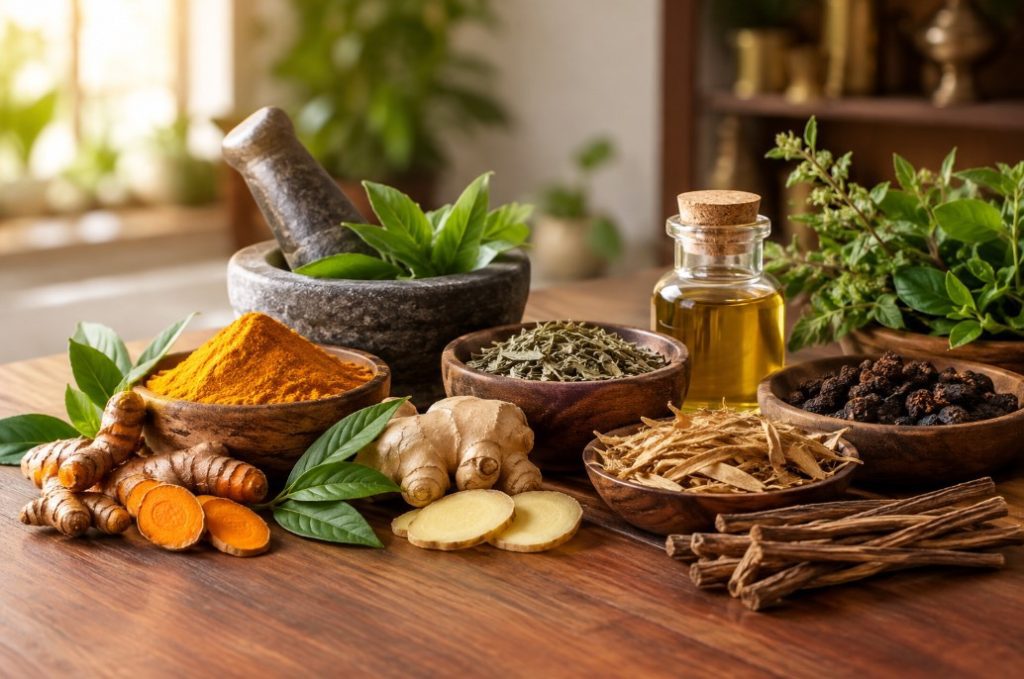
Ayurvedic joint care often includes herbal medicines. Commonly named herbs include Nirgundi, Shallaki (Indian frankincense), Guggulu, Rasna, Ashwagandha, ginger, and turmeric. Some come as tablets or decoctions. Others are used in oils and pastes.
A safety note matters here. The US National Center for Complementary and Integrative Health has pointed out that some Ayurvedic products have been found to contain lead, mercury, or arsenic. Buy only from licensed manufacturers. Ask for batch details. Avoid anything with no label or no ingredient list.
Herbs can also interact with blood thinners, diabetes medicines, and blood pressure tablets. Share your full medicine list with the physician before you start.
What the Evidence Says
Be careful with big promises. Research on Ayurvedic treatment for arthritis exists, but many studies are small, short, or hard to compare. Some trials suggest benefit for pain and stiffness in knee osteoarthritis and rheumatoid arthritis. Others show results similar to standard care. Larger, better-designed studies are still needed.
The sensible reading is this. Ayurveda may help comfort and daily function for some people, but results vary, and it works best alongside your doctor’s care. The NCCIH overview of Ayurvedic medicine is a balanced place to start.
If you take disease-modifying drugs for rheumatoid arthritis, do not stop or reduce them without your rheumatologist’s advice.
What a Typical Ayurveda Arthritis Treatment Programme Looks Like
Centres differ, but the flow is usually similar.
- Day 1: consultation, pulse and digestion check, and a review of your scans and blood reports.
- Days 2 to 4: preparation with oil massage, mild heat, and a diet change.
- Days 5 to 12: the chosen local therapies, such as Janu Basti, plus Basti or Virechana if advised.
- Final days: a recovery diet, herbal medicines, and a home plan.
- After you return: a follow-up teleconsultation.
Many plans run 14 to 21 days. A shorter stay can help with stiffness but leaves less time for deeper therapies. Be wary of anyone who promises a cure in a week.
Natural Joint Pain Relief in India: How to Choose a Centre
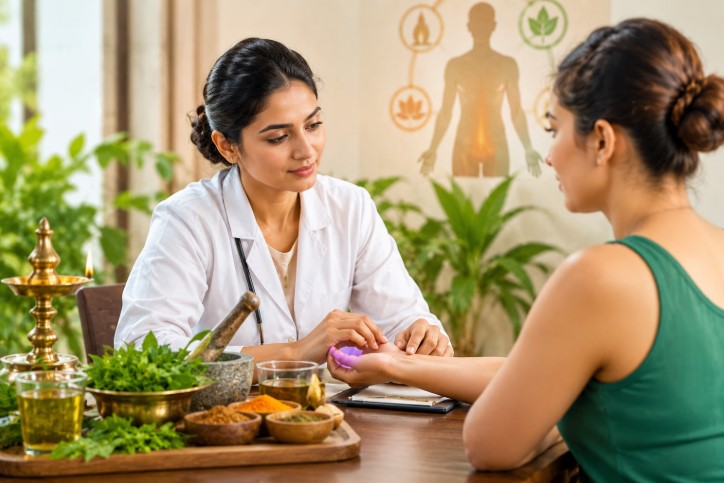
India offers everything from hospital-based Ayurveda units to quiet retreats in Kerala. Ask these questions before you book.
- Is the physician qualified (BAMS or higher), and is the centre registered with the state or recognised under the national Ministry of Ayush framework?
- Will you receive a written plan after a medical consultation, not just a menu of spa packages?
- Do they ask for your reports and current medicines?
- Are medicines made by licensed manufacturers?
- Can they share notes with your doctor back home?
You can compare options through our listings of Kerala Ayurveda resorts and other Ayurveda and wellness centres. Kerala has a long clinical tradition. Cooler months and the monsoon are traditionally preferred for oil therapies, though good centres run all year.
Plan the paperwork early. Foreign patients usually need a medical visa, and our travel and visa assistance page explains the steps. You can confirm current rules on the official Indian Visa Online portal. Before you travel, a pre-travel teleconsultation lets a physician review your reports, and a second medical opinion can confirm your diagnosis. The treatment planning and cost estimate service helps you understand costs before you commit.
Support Your Therapy With Daily Habits
Therapy works better when your home routine matches it. Small habits add up.
- Warm oil self-massage: spend a few minutes on knees, hands, and shoulders before bathing, if your physician says it suits you. Pure cold-pressed carrier oils from Advik Ayurveda are a simple skin-friendly base. They are skin-care oils, not joint medicines.
- Warm, cooked food: favour ginger, cumin, and turmeric in meals, and limit cold drinks and heavy leftovers.
- Gentle movement: walking, joint rotations, and yoga poses suited to your condition.
- Warmth: a warm compress eases morning stiffness for many people.
- Healthy weight: extra weight adds load to the knees.
For a closer look at oil massage and body routines, read Advik’s guide to Ayurvedic body care rituals.
Want a simple oil routine for home?
Common Mistakes to Avoid
- Choosing a package by price or photos instead of by physician qualifications.
- Starting heavy oil therapy during an inflamed, swollen flare without advice.
- Buying herbal tablets online with no batch details or licence information.
- Stopping prescribed medicines because you feel better after a few sessions.
- Booking a very short stay, then expecting long-term change.
- Ignoring the recovery diet after cleansing and returning straight to heavy food and long flights.
Avoiding these six mistakes protects both your safety and your results. A good physician will welcome your questions and explain each step without pressure.
When to See a Doctor First
Some symptoms need prompt medical tests, not just therapy. See a doctor soon if a joint becomes hot, red, and very swollen. The same goes for joint pain with fever, trouble bearing weight, sudden deformity, or morning stiffness that lasts over an hour for several weeks. These signs can point to infection, gout, or inflammatory arthritis that needs early treatment.
The NIAMS guide to osteoarthritis, the NIAMS guide to rheumatoid arthritis, and the CDC arthritis pages explain symptoms and tests in plain language.
A Note for NRIs and Overseas Families
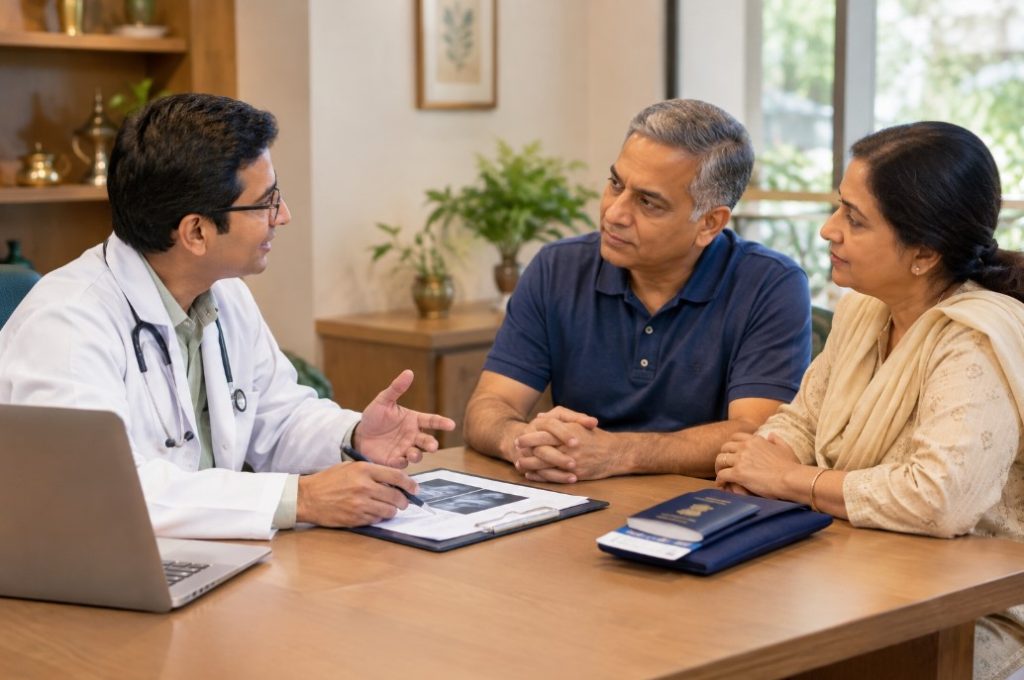
Many NRIs plan care during a family visit. That is practical, but treatment dates can clash with weddings, time with parents, and tight leave. Keep one folder with scans, blood tests, a medicine list, and doctor letters. Ask for a written summary before you fly back.
You can start with a virtual dosha assessment before you travel. If you want a wider picture of how Ayurveda fits into care in India, DeshSansaar’s Ayurveda explained for global Indians guide is a clear primer. Its healthcare reality in India page helps you set realistic expectations about systems and costs.
Back home and keeping your routine going?
The Bottom Line
Ayurvedic therapy for joint pain works best when it is matched to your type of pain, delivered by qualified physicians, and paired with proper medical review. Start with a clear diagnosis. Ask direct questions. Set realistic goals. Relief is usually gradual and comes from routine, not from a single session.
Take the next step: Book Joint Pain Therapy with MorningSun and get guidance on centres, visas, and planning. Read our medical disclaimer before you decide.
FAQs:
Usually, with qualified physicians and licensed medicines. It is not right for everyone, so share your health history first.
Most plans run 14 to 28 days, depending on your condition, strength, and the physician’s advice.
No cure is proven. Therapies may ease pain and stiffness, so use them alongside regular medical care.
Janu Basti, oil massage, and herbal heat are common choices. Your physician decides after examination.
No. Never stop or change prescribed medicines without your treating doctor’s advice.
Usually yes for treatment stays. Check current rules with the Indian mission before you travel.
Cooler months and the monsoon are traditionally preferred, though many centres operate all year.
Comments