
You have a diagnosis. Your doctor has suggested surgery or a long course of treatment. Something still feels unsettled, and you want another expert to look at your case before you commit. If you live outside India, that expert may be in India, and you may never need to board a plane to get the answer.
A medical second opinion in India for international patients is simpler than most people expect. You share your reports online. A specialist reviews them. You receive a written opinion, often with a video call to talk it through. This guide explains each step: who it suits, what to send, how remote review works, what it costs, and what to do with the answer.
If you want the basic definition first, our page on how a second medical opinion works covers it. This article stays focused on the cross-border side, meaning what changes when you are in one country and the specialist is in another.
Why International Patients Look to India for a Second Opinion

Patients abroad choose India for a few practical reasons.
- Specialist depth. Many Indian hospitals treat large numbers of patients every day. Doctors in cancer, heart, bone and joint care see a wide range of cases, including rare ones.
- English-language care. Clinical records, reports and consultations are usually in English, which keeps communication clear.
- Cost. Consultation fees are generally lower than in many Western countries, so a review by a senior specialist is within reach for most families.
- Speed. In some countries, waiting for a specialist appointment takes weeks. A document review can often start within days.
- A path forward. If the opinion suggests treatment, you already have a doctor and a hospital in mind.
A second opinion is not a vote of no confidence in your own doctor. Good doctors expect patients to ask for one. It simply gives you a second set of trained eyes on a decision that is hard to undo.
Have your reports ready and want a specialist to look at them?
Who Should Consider a Second Opinion?
You do not need a rare disease to ask for one. The following situations are common reasons:
- Your doctor has advised major surgery, such as a heart procedure, spine surgery or a joint replacement.
- You have a cancer diagnosis and want to confirm the stage and the treatment plan.
- Your diagnosis is unclear, or two doctors have told you different things.
- The proposed treatment is costly, risky or not covered by your insurance.
- You face a long wait at home and want guidance in the meantime.
- You are thinking about treatment in India and want to confirm the plan first.
For example, a patient with a heart condition may want a view from a cardiologist who works in advanced cardiac care. Someone with a tumour diagnosis may want a review from a team in modern oncology treatment. A person told they need a knee or hip replacement may want to hear from a surgeon in orthopaedic surgery about alternatives.
One clear limit: a remote opinion is not for emergencies. If you have chest pain, sudden weakness, heavy bleeding or any urgent symptom, go to your nearest emergency department right away.
How a Medical Second Opinion in India Works, Step by Step

The process is similar across most services. Here is what you can expect.
Step 1: Share a short case summary
You start by writing down what happened: your age, your diagnosis, the treatment your doctor proposed, and the question you want answered. Keep it short. A clear question, such as “Is surgery necessary, or can I try medicines first?”, helps the specialist focus.
Step 2: Send your records securely
Next, you upload your medical file through a secure channel. Avoid sending sensitive records as casual chat attachments. A good service will give you a protected upload link and ask for your consent to share the file with a doctor.
Step 3: Get matched with the right specialist
Your case should go to a doctor who treats your exact condition every week, not a general physician. For complex cases, ask whether a group of specialists can review it together. A tumour board in cancer care is one example of this.
Step 4: The specialist reviews your file
The doctor studies your reports and images. Review time depends on how complex the case is and how complete the file is. Missing scans are the most common cause of delay.
Step 5: A video discussion
Many patients then have a live video call. This is where you can ask questions and hear the reasoning in plain language. You can read more about this step in our guide to pre-travel tele-consultation.
Step 6: A written opinion
You should receive a written report. It usually states whether the specialist agrees with your diagnosis, what other options exist, the risks and benefits of each, and what to do next. Keep this document. Your own doctor will want to read it.
Not sure whether your case needs a video call or a document review?
Remote Doctor Consultation in India: What to Expect on the Call
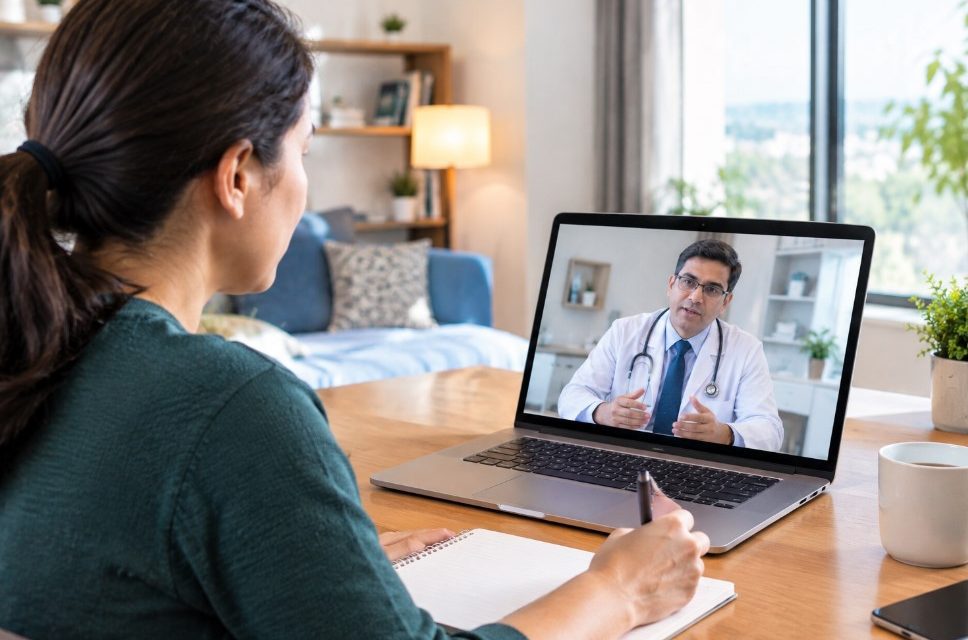
A remote doctor consultation in India works like a normal video visit. You need a stable internet connection, a quiet room and your documents open on screen. Plan for time zones. A call that suits a specialist in Delhi at 11 a.m. may land at 1:30 a.m. for a patient in New York, so agree on a time early.
Some practical tips for the call:
- Write your questions down beforehand and keep the list in front of you.
- Invite a family member to listen in. Two people remember more than one.
- Ask the doctor to explain any medical terms you do not know.
- Ask what would change the advice, such as a new scan or a lab result.
- Note down the doctor’s full name and registration details.
India has formal rules for online consultations. The Ministry of Health and Family Welfare publishes Telemedicine Practice Guidelines that set out who may offer them, how patients should be identified, and how records and consent should be handled. They apply to registered doctors practising in India. They do not control rules in your home country, so it is worth checking how your own doctor or insurer treats an opinion from abroad.
This is also a growing option for families. If your parents live in India and you live overseas, DeshSansaar has a useful read on NRI-focused telemedicine for parents in India, which shows how families set up remote care from a distance.
How to Prepare Your Records the Smart Way

A complete, tidy file saves days. Gather the following before you apply:
- Doctor’s notes and discharge summaries, in date order.
- Blood tests and other lab reports.
- Scans such as X-ray, CT, MRI or PET. Ask your hospital for the original image files as well as the printed report, because specialists often need to view the images themselves.
- Pathology and biopsy reports. In cancer cases, the specialist may also want to re-examine the tissue slides, which is arranged through your hospital.
- A list of all medicines, doses and allergies.
- A short timeline of symptoms and treatments so far.
If any report is not in English, get a translation. Name each file clearly, for example “MRI-spine-March-2026”. This small habit makes the review faster and reduces mistakes.
What Does an Overseas Second Opinion Cost?
Fees vary, so be careful with any service that quotes one flat price for every case. The cost usually depends on:
- The specialty and the seniority of the doctor.
- Whether it is a document review only or includes a video call.
- Whether a single doctor or a group reviews your case.
- Extra items, such as translation, courier of slides or image conversion.
Before you pay, ask five questions. What is the total fee? What does it include? Can I ask follow-up questions, and for how long? Are there any extra charges? Will I get a written report? A clear answer to each is a good sign.
Insurance is another point to check. Some insurers cover second opinions from doctors in their network, but many do not cover opinions from abroad. Call your insurer first and ask in writing. If the opinion leads to treatment in India, a treatment plan with a cost estimate helps you compare numbers before you decide.
Want to know what the process would cost for your condition?
Safety, Privacy and Quality Checks
Because you cannot walk into the clinic, a few checks matter even more.
- Verify the doctor. Ask for the doctor’s registration number. The National Medical Commission and state medical councils maintain registers of licensed doctors in India.
- Look at the hospital. Accreditation from bodies such as NABH, India’s hospital quality board, is one sign that a hospital follows set standards.
- Protect your data. Ask how your files are stored, who can see them and for how long. Give consent in writing.
- Stay independent. The opinion should be about your health, not a sales pitch. Be cautious if you feel pushed to travel or pay quickly.
- Know the patient-safety basics. The World Health Organization explains why asking questions and being involved in your care lowers the risk of harm.
What to Do With the Opinion You Receive

There are three common outcomes, and each one has a sensible next step.
- The opinion agrees with your doctor. You can move ahead with more confidence.
- It adds options. Take the report to your own doctor and discuss which option suits your age, health and goals.
- It disagrees. Do not panic and do not rush. Ask both doctors to explain their reasoning. If the gap stays wide, a third opinion can break the tie.
Share the report openly with your regular doctor. Most are glad to see it, and it keeps your care coordinated. Also remember that your local doctor knows your full history and your local options. The best decisions use both views.
It also helps to understand how Indian hospitals actually run, especially if you have not lived there for years. DeshSansaar’s piece on the healthcare reality in India gives a grounded picture of what to expect on the ground.
If You Decide to Be Treated in India

Some patients stay with their home doctor. Others choose to travel after the opinion. If you are in the second group, plan in this order.
- Choose the hospital with care. Our guide on choosing between public and private hospitals explains the differences in cost, waiting time and comfort.
- Understand what you are paying for. See what a medical tourism package covers so that you can compare offers fairly.
- Sort out your visa. India offers medical visas, and the official Indian e-Visa portal lists the current rules. Our team can also walk you through travel and visa assistance.
- Read how others managed it. These real patient journeys show what the process looks like from start to finish.
Small comforts matter on a long trip. Cabin air is dry, and hospital stays can leave skin and lips tired. Many travellers pack gentle basics such as a lip balm from Advik Ayurveda and a simple skin care routine for the flight and recovery. These are comfort items, not medical treatment, so check with your doctor if you have sensitive skin or a skin condition.
For the full range of help on offer, from records to travel, see our patient support services.
Common Mistakes to Avoid
- Sending only printed reports and no scan files.
- Asking a vague question such as “What do you think?”
- Paying before you know what the fee covers.
- Changing your whole treatment plan based on a single document without discussing it with your own doctor.
- Waiting until the last day before surgery.
Ready to take the first step?
Request a Second Opinion or send us a quick note through our enquiry form, and we will tell you what to prepare.
Final Thoughts
A medical second opinion in India for international patients comes down to four things: a clear question, a complete file, a qualified specialist and an honest report. When those are in place, you can make a hard decision with more clarity and less fear. Take your time, ask for everything in writing, and use the answer to talk openly with your own doctor.
FAQs:
Yes. Specialists review your records online and discuss the findings with you on a video call.
It varies with case complexity and file completeness. A full file helps avoid delays.
Doctor notes, lab reports, scan images with reports, pathology results, medicine list and a short symptom timeline.
Many do not cover overseas opinions. Ask your insurer in writing before you pay.
Yes, if the service uses secure uploads, written consent and clear data-storage rules.
No. The opinion is yours to use with any doctor, anywhere. Travel is always optional.
Yes. Most specialists welcome relatives, which helps patients remember advice and ask better questions.
Comments