
Rhinoplasty is surgery that changes the shape, size or structure of the nose. It may be planned for appearance, breathing problems, or both. The procedure can involve the nasal bones, cartilage, septum or soft tissues, so the final price depends on what needs to be changed. The American Society of Plastic Surgeons rhinoplasty guide explains that nose reshaping can address proportions, bridge shape, nasal tip, nostrils and some structural breathing problems.
For a patient comparing clinics, the important question is not simply “What is the cheapest quote?” A better question is “What exactly is included in the quote, and is the surgeon recommending the right procedure for my anatomy and goals?” A lower headline price can become expensive if hospital charges, anesthesia, tests, medicines, revision planning or extra nights are excluded.
Rhinoplasty cost in India: a practical planning range

For initial budgeting, many private Indian providers quote surgical rhinoplasty in a broad range of roughly ₹1 lakh to ₹3 lakh or more. Complex primary surgery, revision rhinoplasty, grafting, combined functional work, premium hospitals and higher surgeon fees can move the estimate above this range. These are planning figures, not a guaranteed price list.
MorningSun listings and its published cosmetic-treatment guides also show that rhinoplasty pricing varies by city, clinic, surgeon and procedure complexity. For example, its Chennai cosmetic clinic guide reports an indicative rhinoplasty range of ₹80,000–₹2,00,000, while its wider India cosmetic-clinic guide places rhinoplasty around ₹1,00,000–₹3,00,000. Treat such figures as market reference points rather than personal quotations. You can also review MorningSun’s cosmetic and dermatology guide before comparing providers.
For an overseas patient, the treatment budget should be larger than the surgery quote. Flights, accommodation, local transport, pre-operative tests, consultation fees, medicines, companion costs and the length of stay can all affect the real trip cost.
What is included in a rhinoplasty quote?
A written estimate should identify the surgeon fee, hospital or operating-facility charges, anesthesia, routine investigations, medicines and immediate post-operative care. It should also state whether follow-up visits are included and whether the quoted amount assumes a straightforward primary rhinoplasty.
Ask the clinic to separate medical costs from travel and accommodation costs. This makes it easier to compare two providers fairly. If one quote looks much cheaper, check whether it excludes anesthesia, operating-room charges, graft material, diagnostic tests or follow-up care.
For a broader budgeting framework, MorningSun’s treatment planning and cost-estimate guide recommends reviewing hospital charges, specialist fees, diagnostics, medicines, post-treatment care and travel expenses rather than focusing on one number.
Main factors that change facial cosmetic surgery cost

Rhinoplasty is only one part of facial cosmetic surgery. Other procedures may include facelift surgery, eyelid surgery, chin or jaw reshaping, facial implants and selected non-surgical treatments. Each has a different cost structure.
1. Type and complexity of surgery
A straightforward primary rhinoplasty may cost less than a revision procedure. Revision surgery can require more detailed planning, scar-tissue management or cartilage grafting. Functional problems may also require additional work.
2. Surgeon’s training and experience
The surgeon’s qualifications, relevant surgical training and experience with the procedure matter more than a marketing label. Patients searching for the “best cosmetic surgeons for rhinoplasty” should compare credentials, rhinoplasty-specific experience, hospital privileges, consultation quality, before-and-after cases and how clearly risks are explained.
3. Hospital or surgical facility
Facility charges vary with location, infrastructure, anesthesia services, operating-room standards and the level of post-operative monitoring. A properly equipped and appropriately licensed facility is part of the safety decision, not just a cost line.
4. City and location
Delhi NCR, Mumbai, Bengaluru, Chennai, Hyderabad and other major medical hubs can have different pricing. Demand, facility costs and surgeon practice patterns influence the final estimate. The cheapest city is not automatically the best choice if follow-up becomes difficult.
5. Additional procedures
Some patients may need septal correction or another functional procedure. Others may combine facial procedures. Combining treatments can change the surgical plan, anesthesia time and recovery requirements, so the quote must be based on the actual proposed plan.
Rhinoplasty for NRIs and foreigners: the real medical-tourism budget
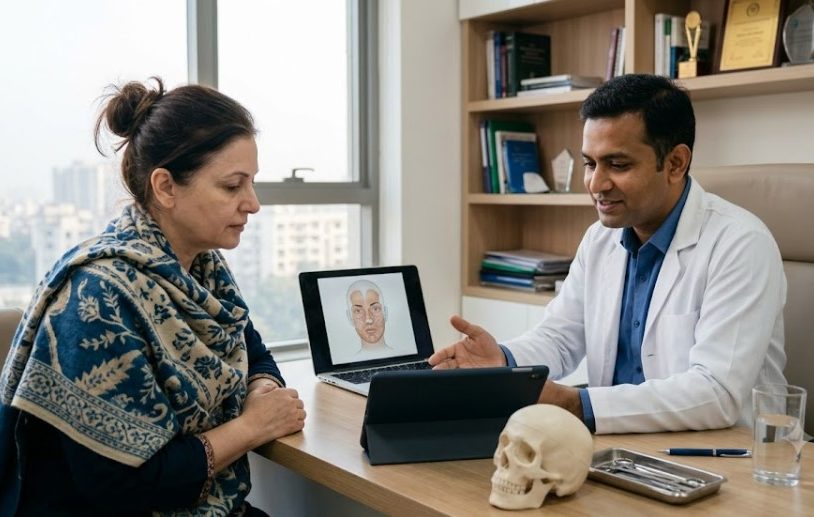
Nose surgery medical tourism can make sense when a patient has a clear treatment plan, enough recovery time and a reliable follow-up arrangement. It becomes risky when a patient flies in for surgery immediately after a short online conversation and plans to fly home before the surgeon has assessed early healing.
A safer planning sequence is: remote enquiry, medical-record review where appropriate, specialist consultation, written estimate, facility verification, travel planning, surgery, early follow-up and a clear plan for complications or delayed healing.
Before travelling, consider a pre-travel teleconsultation to understand what information the treating team may need and whether an in-person assessment is required before surgery. This is a planning tool, not a substitute for the surgeon’s examination.
Plan Your Rhinoplasty Journey coming to India from abroad?
How to compare two rhinoplasty quotes
Create a simple comparison sheet with these headings: surgeon fee, facility fee, anesthesia, tests, medicines, overnight stay, follow-up visits, graft or implant costs if applicable, emergency contact, revision policy and refund or cancellation terms.
Then compare the medical plan, not just the total. A quote for a different technique or a different level of hospital care is not an apples-to-apples comparison.
Ask for the estimate in writing. DeshSansaar’s guide on how treatment works in India also stresses written estimates, realistic expectations and careful evaluation when NRIs or foreigners seek healthcare in India.
A separate skincare track after surgery
Post-operative skin care should follow the treating surgeon’s instructions. If you are separately researching everyday Ayurvedic skincare and natural beauty routines, you can explore Advik Ayurveda’s skincare collection. This is a general skincare resource, not a substitute for post-surgical medical advice.
Need a Clear Cost Estimate?
How to choose a surgeon without relying on “best” lists

There is no universal “best” cosmetic surgeon for every patient. Rhinoplasty is highly individual because facial proportions, skin thickness, cartilage, nasal airway and desired changes differ.
Use a checklist instead: verify the surgeon’s relevant plastic-surgery qualifications; ask how often they perform rhinoplasty; ask where surgery will take place; review representative before-and-after cases; ask what technique is being proposed and why; discuss breathing as well as appearance; and ask how complications and revision cases are handled.
The ASPS rhinoplasty consultation checklist recommends discussing surgical goals, medical history, medications, examination, options, likely outcomes and possible complications during consultation. The same principle is useful when comparing Indian providers.
Safety matters more than a low headline price
Rhinoplasty is surgery, not a salon treatment. Possible complications include infection, bleeding, changes in sensation, breathing difficulty, poor healing, swelling, unsatisfactory appearance and the possibility of revision surgery. The {a(“ASPS safety guidance”, links[“ASPS safety”])} explains these risks in more detail.
For hospitals, accreditation can be one quality signal, although it should not replace checking the individual surgeon and facility. NABH hospital accreditation standards cover areas including patient care, infection control, patient safety, facilities and information management.
Patients should also be cautious with dramatic before-and-after claims or promises of guaranteed symmetry. Realistic goals and informed consent are more useful than a perfect-result promise.
What should international patients plan for after surgery?

Recovery is part of the cost calculation. You may need accommodation near the treating facility, local transport, medicines, follow-up appointments and enough time before flying home. Swelling can persist after the early recovery period, and the final nasal contour takes time to refine.
The ASPS rhinoplasty recovery guidance notes that initial swelling improves over weeks but the nose can continue refining for up to a year. Do not plan international travel solely around the day the splint is removed.
International patients should also confirm visa requirements directly from the official Government of India e-Visa portal. Visa rules can change, so avoid relying on old social-media advice.
Can facial cosmetic surgery be combined with rhinoplasty?
Sometimes, but only when the surgeon considers the combined plan appropriate. Facial procedures can alter anesthesia time, recovery, swelling and follow-up requirements. Combining operations simply to reduce travel time is not automatically safer or cheaper.
If you are considering more than one procedure, request one written treatment plan showing which procedures are recommended, why they are being combined, the expected recovery period and the total estimated medical cost.
A practical checklist before paying a surgical deposit
Before committing, confirm: surgeon credentials; procedure name; surgical facility; anesthesia plan; itemized quotation; pre-operative tests; expected hospital stay; follow-up schedule; emergency contact; complication-management plan; cancellation terms; and the time you should remain in India.
For NRIs and foreigners, add passport and visa requirements, travel insurance questions, accommodation near the hospital and a companion plan if the surgeon advises assistance after surgery.
If you need help organizing the medical-travel side, MorningSun’s travel and visa assistance guide explains practical travel-planning considerations for patients coming to India.
Planning Your Medical Trip to India?
When should you request a rhinoplasty consultation?
A consultation is useful when you already know your goals but need a realistic assessment of what surgery can achieve. Bring previous medical records, details of medicines and supplements, previous nasal surgery information, breathing concerns and questions about recovery.
For patients abroad, send clear records in advance where the clinic accepts them, but expect the surgeon to require an in-person examination before making a final surgical decision. A remote estimate should be treated as preliminary.
CTA: Get Rhinoplasty Consultation
If you are comparing rhinoplasty options in India, start with a structured consultation rather than choosing on price alone. Get Rhinoplasty Consultation and ask for an individualized treatment plan and written cost estimate.
Get Rhinoplasty Consultation
Discuss your goals, treatment options, expected recovery and estimated cost before making your decision.
Conclusion
Rhinoplasty cost in India can be attractive compared with many international markets, but the right budget is the full cost of safe care—not just the advertised surgery fee. Procedure complexity, surgeon experience, facility, city, anesthesia, tests, follow-up and travel can all change the final amount.
For NRIs and foreigners, the strongest approach is to compare credentials, treatment plans, safety standards and itemized estimates together. A good consultation should leave you with fewer unanswered questions, not just a lower price.
FAQs:
A common planning range is ₹1–3 lakh or more, depending on complexity, surgeon, facility and city.
Often yes, but compare total medical and travel costs rather than surgery fees alone.
Complexity, surgeon expertise, facility, anesthesia, grafts, diagnostics, location and follow-up needs.
Not always. Request an itemized quote covering surgeon, facility, anesthesia, tests and follow-up.
Stay duration depends on surgery and healing; the treating surgeon should provide individual travel guidance.
It can address some structural breathing problems, but suitability requires specialist assessment.
Verify qualifications, rhinoplasty experience, facility, case results, risks discussed and follow-up arrangements.
No. A low quote may exclude important medical, facility or follow-up costs.
External Resources
American Society of Plastic Surgeons – Rhinoplasty
American Society of Plastic Surgeons – Rhinoplasty Safety
American Society of Plastic Surgeons – Rhinoplasty Recovery
Comments