
A cancer diagnosis brings two worries at once: your health and your bill. If you live abroad, the second worry can feel just as heavy. Treatment at home may be delayed by waiting lists, or priced beyond what insurance will pay.
India is one of the first places families look. The reason is simple. Skilled cancer teams, modern machines and lower prices sit in the same country. This guide explains the cancer treatment cost in India in plain numbers, shows what pushes the price up or down, and tells you how to get a written estimate before you book a flight.
One note first. Every figure here is a planning range, not a quote. Your final cost depends on your exact diagnosis and the plan your doctors approve.
Why International Patients Look at India for Cancer Care
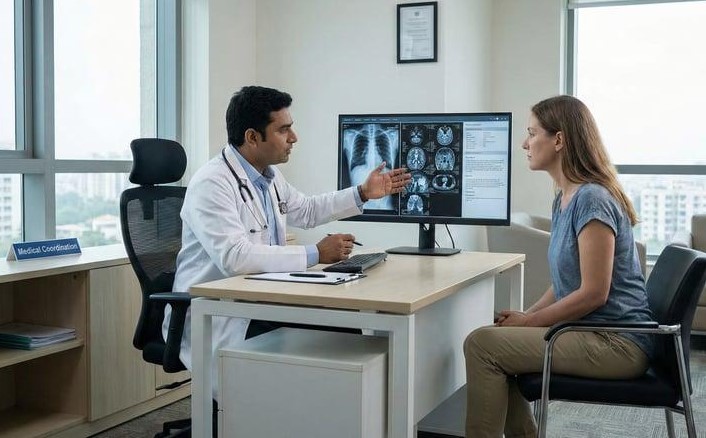
Most patients do not come only for price. They come because the care is available now, and the price is workable.
- Access to full-service centres. Large cancer hospitals offer surgery, radiation, chemotherapy and tumour testing under one roof.
- Experienced teams. Many oncologists in India treat a high volume of cases every year, so common cancers are familiar ground.
- Shorter waits. Scans, biopsies and surgery dates often move faster than in public systems abroad.
- English-speaking staff. Doctors and nurses in major cities work in English every day.
If you want a wider picture of how care is planned from first scan to follow-up, read how modern cancer care works.
Not every patient needs a full treatment abroad. Some choose India only for a specific step, such as a surgery, a radiation course or a second review of scans, and then return home for follow-up. Splitting care this way can lower the bill and shorten the time away from family. The National Cancer Institute explains the main types of cancer treatment, which helps you understand each line in an estimate.
Cancer Treatment Cost in India: The Realistic Range

Published hospital and industry sources place the overall bill for most cancers between roughly ₹2.5 lakh and ₹25 lakh. That is about USD 2,800 to USD 28,000. Simple, early-stage cases sit near the lower end. Blood cancers needing a transplant, or cases using costly new drugs, sit far above it.
The table below breaks the bill into parts. Dollar values use about ₹88 per USD, so please check the live rate before you plan.
| Cost item | Approx. range (INR) | Approx. range (USD) |
|---|---|---|
| Diagnosis and staging work-up | ₹40,000 – ₹2,00,000 | $450 – $2,300 |
| Standard cancer surgery | ₹1,50,000 – ₹6,00,000 | $1,700 – $6,800 |
| Robotic or keyhole surgery | ₹4,00,000 – ₹8,00,000+ | $4,500 – $9,100+ |
| Chemotherapy, per cycle | ₹20,000 – ₹1,50,000 | $230 – $1,700 |
| Radiation course (IMRT and similar) | ₹1,00,000 – ₹3,50,000 | $1,100 – $4,000 |
| Targeted or immunotherapy, per cycle | ₹1,50,000 – ₹4,00,000+ | $1,700 – $4,500+ |
| Bone marrow transplant | ₹15,00,000 – ₹35,00,000 | $17,000 – $40,000 |
| Typical overall treatment plan | ₹2,50,000 – ₹25,00,000 | $2,800 – $28,000 |
Diagnosis and Staging
Treatment cannot start until doctors know the exact cancer type and stage. This usually means a biopsy, a CT or MRI scan, blood tests, and often a PET-CT scan. Tumour gene testing adds to the bill, but it can save money later by ruling out drugs that will not work.
Surgery
Surgery costs depend on the organ and the method. Open surgery is usually cheaper than robotic or keyhole surgery. Robotic surgery has a higher fee, but patients may leave hospital sooner, which lowers room charges.
Chemotherapy Cost in India
The chemotherapy cost in India is charged per cycle, and most plans need four to eight cycles. Older generic drugs are far cheaper than targeted drugs. A day-care session, where you go home the same evening, costs less than an overnight stay. Ask the hospital which drugs are planned and whether lower-cost, equally proven options exist.
Radiation and Advanced Therapy
Radiation is priced by technique and number of sessions. Standard external beam treatment costs less than IMRT or stereotactic methods. Proton therapy is limited to a few centres and is priced much higher. Immunotherapy and targeted drugs are the biggest cost drivers in many treatment plans, so confirm early whether your case truly needs them.
Want a number built around your own reports?
What Decides Your Final Bill

Cancer Type and Stage
Early cancers are often treated with surgery alone or with a short course of therapy. Advanced cancers need several treatments in sequence, and each one adds cost. This is why two patients with the same cancer name can receive very different bills.
Hospital Type and City
A premium private hospital in a metro city charges more than a mid-sized city centre. Room category matters too. A single private room costs more per night than a twin-sharing room, and the gap adds up over a long stay.
Drug Choice
Drugs can make up half of the bill. Brand-name biologic and immunotherapy drugs cost many times more than generic chemotherapy. A good oncologist will explain why a drug is chosen, not just name it.
Length of Stay and Complications
A smooth recovery keeps the bill near the estimate. Infections, a second surgery or an ICU stay do not. Always ask what the estimate covers if something goes wrong, and what happens to the price if the plan changes.
How to Choose Oncology Hospitals in India
Searching for oncology hospitals India brings up long lists. Use a short checklist to narrow them down.
- Accreditation. Look for NABH or JCI accreditation, which signals set standards for safety and infection control.
- A tumour board. The best centres review each case with surgeons, medical oncologists and radiation oncologists together.
- Equipment. Ask which radiation machines and imaging systems the centre uses for your cancer type.
- International patient desk. A dedicated team handles records, visas, airport pickup and billing questions.
- Written pricing. A hospital that will not put an estimate in writing is a hospital to question.
Take a look at advanced medical treatments on MorningSun to see how oncology fits alongside cardiac, orthopaedic and transplant care at partner centres.
Ask each hospital one more question: who will you see on follow-up visits? Cancer care continues for months after surgery, and regular scans and checkups are part of the plan. Knowing who handles them, and how records reach your doctor at home, keeps care smooth after you fly back.
Costs People Forget to Budget For

The hospital package is only part of the spend. Families who plan well add a buffer of 20 to 30 percent for the following.
- Return flights and local transport for the patient and one companion
- Hotel or serviced apartment near the hospital, often for several weeks
- Medicines taken home, follow-up scans and tests after discharge
- Translator or coordinator help, if you choose it
- Visa fees and medical record translation or printing
Read what a medical package includes so you know which of these items a package already covers.
How India Compares With Your Home Country
Prices in the USA, UK, Canada and Australia depend on insurance, so a direct comparison is tricky. Still, patients who pay out of pocket abroad often find the same surgery, chemotherapy or radiation course costs several times more at home. Patients with good insurance may find that India helps when their plan has high co-pays, drug limits or long waits.
That said, cheaper is not always better. Use price as one input, and put safety, team experience and follow-up care first. For a clear view of how hospitals, billing and paperwork really run, DeshSansaar explains how treatment works in India from a global Indian’s point of view.
Medical Tourism Cancer Care: Step-by-Step Planning

Good medical tourism cancer care starts at home, before you travel. Follow these steps in order.
- Gather your records. Collect pathology reports, scans on disc or digital link, blood tests and a list of past treatments.
- Get a remote opinion. A review by an Indian oncologist can confirm whether travel is needed. See how a remote second opinion works.
- Ask for a written estimate. Request line-by-line pricing for diagnosis, surgery, drugs, room and follow-up.
- Speak to the doctor. Book a pre-travel teleconsultation so your questions are answered before any money moves.
- Arrange the visa. Most foreign patients apply for a medical visa. Our travel and visa support page explains the paperwork.
- Plan the stay. Pick a place near the hospital, and keep a companion with you.
If you are doing this for the first time, plan the trip step by step with our full guide.
Not sure where to start?
Three Sample Budget Scenarios
These examples are illustrative only. They show how the same line items combine, not what your case will cost.
- Early-stage solid tumour, surgery only: diagnosis, one surgery and a short stay may land near ₹3 lakh to ₹7 lakh, plus travel and lodging.
- Surgery followed by chemotherapy and radiation: this combined plan often reaches ₹8 lakh to ₹18 lakh, because each stage adds its own fees.
- Advanced disease on targeted drugs or immunotherapy: monthly costs can be high and open-ended, so ask for a three-month projection rather than a single figure.
Notice the pattern. The more steps in your plan, the more important a line-by-line estimate becomes.
Insurance, Payment and Financial Planning
Check with your home insurer before you travel. Some policies cover treatment abroad, some cover only emergencies, and some pay only after you submit receipts. Ask the hospital for itemised invoices and discharge summaries, because insurers and tax offices often need them.
Agree on how payments will be made. Pay through hospital accounts or official channels, keep every receipt, and avoid cash deals with third parties. If you are an NRI, also confirm whether any family funds or Indian accounts will be used, so the paperwork stays clean.
Red Flags to Avoid
Cancer care is a high-stakes purchase, so watch for warning signs.
- A price quoted before anyone has seen your reports
- Pressure to pay a large advance quickly
- Promises of a guaranteed cure
- Agents who will not name the hospital or doctor
- No written terms on refunds or plan changes
For a deeper look at common traps, read the red flags NRIs should watch for before you transfer any money.
Recovery and Supportive Care After Treatment

Healing continues after the last session. Rest, steady meals, light walking and emotional support all matter. Many patients prefer a quiet place to recover, and our guide on choosing your recovery space compares the options.
Skin and hair can feel sensitive after treatment. Some patients look for gentle Ayurvedic skincare for daily comfort. Always check with your oncologist first, and treat such products as care for comfort, never as a cancer treatment.
Prefer to talk it through?
Final Thoughts
The cancer treatment cost in India varies widely, but it becomes much clearer once you share your reports and ask for a line-by-line estimate. Start with your records, get a remote opinion, and compare written plans. Then decide with a calm mind. If you would like help, our patient support team is a message away.
Ready to move forward?
FAQs:
Most plans fall between ₹2.5 lakh and ₹25 lakh, depending on cancer type, stage, hospital and drugs.
Often yes, especially for out-of-pocket patients. Cost per cycle depends on drugs, so ask for a drug-wise estimate.
Yes, usually. Medical visas are issued for treatment, and a hospital letter helps. Check current rules on the official portal.
Yes. Share your reports and hospitals can give a written estimate, which may change after in-person tests.
They can be. Ask what is excluded, such as ICU, complications, drugs and follow-up scans.
Comments