
Men’s hair care tends to follow a predictable pattern: ignore it completely until the shower drain starts telling an uncomfortable story, then panic-buy three different products in a single week. Somewhere in between those two extremes is a routine that actually works — simple enough to stick with, targeted enough to make a real difference.
Ayurvedic hair care for men isn’t a rebrand of the same three shampoo bottles with a Sanskrit name slapped on. It’s a genuinely different approach: fewer synthetic surfactants, ingredients chosen for a specific reason rather than a marketing trend, and a routine built around consistency rather than intensity.
This guide covers what that routine actually looks like, what onion oil is doing (and not doing) for hair fall, and when natural care stops being enough and it’s time to get pattern hair loss checked properly.
Why Men’s Hair Care Often Gets Ignored Until It’s a Problem
Most men’s grooming routines are built around shaving and maybe a moisturiser, with hair care limited to whatever shampoo happens to be in the shower. That’s rarely a problem in your twenties, but hormonal changes, stress, pollution, and genetics start showing up on the scalp well before most men start paying attention to it.
By the time hair fall becomes visible enough to search for a solution, some of it has often been building for a year or more. That’s not a reason to panic — hair loss responds to consistent care at almost any stage — but it does mean starting a routine before there’s a visible problem tends to produce better long-term results than starting after.
Ayurvedic Hair Care for Men: The Core Routine
Ayurvedic hair care for men comes down to a small number of consistent habits rather than a long list of products.
- Oil the scalp two to three times a week, using a warm oil massage to boost circulation and deliver nutrients directly to the follicle.
- Wash with a mild, herbal shampoo rather than a harsh, sulphate-heavy formula that strips natural oils and can trigger the scalp to overcompensate with excess oil.
- Avoid daily washing where possible, since over-washing disrupts the scalp’s natural balance more than it helps.
- Include a weekly scalp treatment — a mask or pack with ingredients like bhringraj, amla, or fenugreek — for deeper nourishment beyond daily oiling.
- Support the routine with diet, since protein, iron, and biotin deficiencies commonly show up first as hair thinning.
None of this replaces a dermatologist’s advice for significant or sudden hair loss, but as a foundation for general scalp and hair health, it’s a solid, low-risk starting point.
Onion oil is one of the most commonly recommended starting points for this routine. Advik Ayurveda’s Onion Hair Oil, formulated for use on hair and beard is a widely used option worth knowing about.
Onion Oil for Men: Why This Ingredient Keeps Coming Up
Onion extract is rich in sulfur compounds linked to keratin production, and a small 2002 clinical study found that topical onion juice significantly improved hair regrowth compared to a placebo — though that trial specifically studied alopecia areata, an autoimmune patchy hair loss condition, not male pattern baldness, and it hasn’t been replicated at scale in the decades since.
This doesn’t mean onion oil is ineffective for general hair fall — many men report noticeable improvements in scalp circulation, hair texture, and reduced shedding with consistent use, and the underlying antimicrobial and circulation-boosting properties have a reasonable basis. It does mean the strongest evidence relates to a specific condition, not a guaranteed fix for thinning hair generally. Reasonable expectations, not miracle claims, tend to lead to the most satisfying results.
Hair Fall Solution Men Actually Stick With (Not Just Buy)
The best hair fall solution men can commit to isn’t necessarily the most expensive or most talked-about product — it’s the one that fits into an actual weekly routine without feeling like a chore.
- Keep the oil bottle somewhere visible, like next to a toothbrush, rather than in a drawer where it’s easy to forget.
- Pair oiling with an existing habit, like a Sunday evening wind-down, so it becomes automatic rather than something to remember.
- Track progress with monthly photos in consistent lighting, rather than checking daily, since day-to-day hair fall is too noisy to judge a routine by.
- Give any new product at least six to eight weeks before deciding whether it’s working, since hair growth cycles move slowly regardless of what’s applied.
A product bought and abandoned after a week never had a real chance to show results. The routine that gets followed consistently, even if it’s simpler, almost always outperforms an ambitious one that gets skipped half the time.
Consistent grooming habits have deep roots in Indian tradition, well beyond hair oil alone. Desh Sansaar’s look at Indian rituals that still shape daily life is worth a read for the wider context.
Natural Hair Care India: Adapting the Routine to Climate and Lifestyle
Natural hair care India-wide has to account for conditions that don’t apply everywhere — heat, humidity, hard water, and pollution in major cities all put additional stress on hair and scalp health.
- Humid climates often call for lighter oils, like coconut or almond, rather than heavier options that can feel greasy and attract more dust and pollution.
- Hard water common in many Indian cities can leave mineral buildup on the scalp — an occasional clarifying rinse with diluted apple cider vinegar can help counter this.
- Frequent helmet or cap use for commuting can trap sweat and heat against the scalp, making regular washing and a lighter oil formula more important than in cooler climates.
- Seasonal adjustment matters too — richer, more nourishing oils in dry winter months, lighter formulas during humid summer stretches.

When Natural Care Isn’t Enough: Recognizing Pattern Baldness
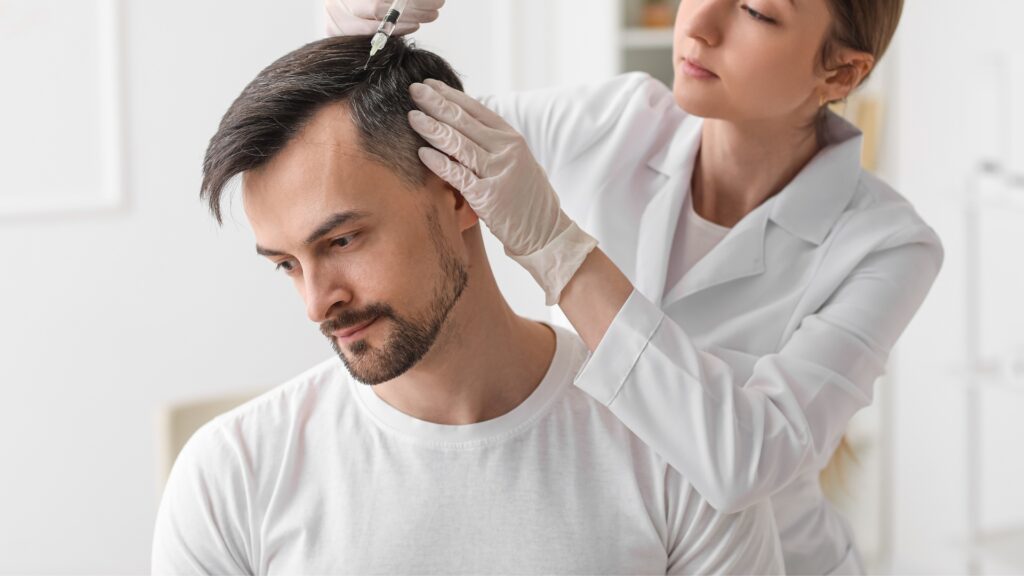
Natural routines genuinely help with general hair health, shedding related to stress or nutrition, and scalp conditions like dandruff. What they can’t reverse on their own is androgenetic alopecia — male pattern baldness — which is driven by genetics and hormones (specifically DHT sensitivity in certain follicles) rather than a lack of nourishment.
Signs worth taking to a dermatologist rather than treating with home remedies alone include a receding hairline that’s progressing steadily, thinning concentrated at the crown, or a family history of pattern baldness combined with early, noticeable thinning. Ayurvedic and natural care can still play a supportive role alongside medical treatment in these cases — it’s not an either-or choice, but it does mean setting the right expectations for what natural care alone can achieve.
If hair thinning is part of a bigger picture — stress, nutrition, hormones — it’s worth looking at holistically. Morning Sun’s personalised wellness programs address hair and skin concerns alongside broader health factors.
Conclusion
Ayurvedic hair care for men works best as a consistent, realistic routine rather than a reactive purchase made after noticing a receding hairline. Oiling, gentle cleansing, and a bit of patience cover most general hair health concerns — and knowing when a pattern points to genetics rather than nourishment is just as important as the routine itself.
Start simple, give it the weeks it actually needs, and treat natural care as a genuine long-term habit rather than a quick fix. That shift in expectations is often what separates the men who stick with a routine from the ones who give up after two weeks.
FAQs:
Most men notice initial changes in hair texture and reduced shedding within four to six weeks, with more visible density improvements typically taking two to three months of consistent use.
The clinical evidence for onion oil is limited to a small study on alopecia areata, not general hair fall or pattern baldness. Many men report benefits from consistent use, likely due to improved scalp circulation, but it shouldn’t be treated as a guaranteed cure.
Yes, though lighter oils like almond or a diluted formula work better than heavier ones for oily scalp types. Frequency also matters — oily scalps generally do better with two applications a week rather than daily oiling.
Natural care supports general scalp and hair health but doesn’t reverse androgenetic alopecia on its own, since that condition is driven by genetics and hormones. Medical treatment is typically needed alongside any natural routine for pattern baldness specifically.
Two to three times a week works well for most hair types when combined with regular oiling. Daily washing tends to be unnecessary and can strip the scalp of the natural oils a good routine is trying to support.
External Resources
PubMed — Onion Juice (Allium cepa L.), A New Topical Treatment for Alopecia Areata (2002)
Comments